
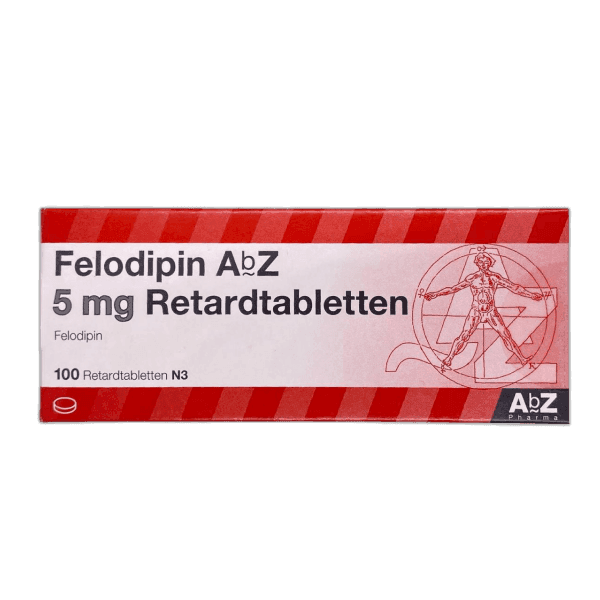
What is Felodipine?
Felodipine is a dihydropyridine-type calcium channel blocker with particularly high vascular selectivity. It acts preferentially on the smooth muscle cells of the arteries and has comparatively little effect on the heart.
Felodipine is taken as an extended-release tablet that releases the active ingredient evenly over 24 hours. It is approved for the treatment of high blood pressure and stable angina pectoris. Well-known products are Felodipin-ratiopharm® and Plendil®.
The high vascular selectivity means that felodipine strongly dilates the blood vessels but has hardly any effect on heart function. This is advantageous but can lead to a reflex increase in heart rate.
Active Ingredients & Mechanism of Action
Active ingredient: Felodipin
Felodipine blocks L-type calcium channels with high vascular selectivity:
Mechanism of action:
- Selective blockade of the calcium channels in the vascular muscle
- Very high vascular/cardiac selectivity (approx. 100:1)
- Arterial vasodilation and blood pressure reduction
- Reduction of peripheral vascular resistance
Special features:
- Highest vascular selectivity of all dihydropyridines
- Hardly any negative inotropy (no reduction in the heart's force of contraction)
- As an extended-release form, an even 24-hour effect
- Less reflex tachycardia than with short-acting calcium channel blockers
Additional effect:
- Natriuretic effect (promotes salt excretion)
- Improves kidney perfusion
- May increase renal sodium excretion
Onset of action: Extended-release form: onset of action after 2-5 hours. Even effect over 24 hours.
Who is it suitable for?
Felodipine is suitable for:
- Adults with high blood pressure
- Chronic stable angina pectoris
Particularly suitable for:
- High blood pressure with a normal heart rate
- Older patients with isolated systolic hypertension
- In combination with beta blockers (complementary mechanism)
- Patients with mild kidney impairment
Not suitable:
- Decompensated heart failure
- Unstable angina pectoris
- Severe aortic stenosis
- Pregnancy and breastfeeding
- Within 4 weeks after an acute heart attack
Available Dosages
High blood pressure:
- Starting dose: 5 mg once daily
- Usual dose: 5-10 mg once daily
- Maximum dose: 10 mg daily
Angina pectoris:
- 5-10 mg once daily
Older patients / liver impairment:
- Starting dose: 2.5 mg once daily
Available strengths:
- 2.5 mg, 5 mg, 10 mg extended-release tablets
Dosage form and pack sizes
The medicines catalogue lists 2 pack variants: 2 strengths in one pack size.
- Dosage form
- Retardtablette
- Strengths
- 5 mg, 10 mg
- Pack sizes
- 100 units
| Strength | Pack | PZN | Duration |
|---|---|---|---|
| 5 mg | 100 units | 05888125 | 100 days |
| 10 mg | 100 units | 01414376 | 100 days |
Packs listed in the German medicines catalogue. Which of them are currently available and what they cost is shown in the price overview.
The Pharmazentralnummer (PZN) is the nationwide unique identifier of a pack in Germany.
Duration is the catalogue value for the usual dosage. How long a pack actually lasts depends on the dose your doctor prescribes.
How to Take
How to take:
- Once daily, preferably in the morning
- Swallow the extended-release tablet whole without chewing – do not split, chew, or crush it
- Can be taken with or without a light meal
- Do NOT take with grapefruit juice
Important notes:
- Do not split extended-release tablets (the extended-release mechanism is destroyed)
- Grapefruit juice can increase levels 2-3-fold
- Regular blood pressure monitoring
- If flushing and headaches occur at the start: often improvement after 1-2 weeks
Contraindications
Felodipine must not be taken in case of:
- Hypersensitivity to felodipine or other dihydropyridines
- Decompensated heart failure
- Severe aortic stenosis
- Unstable angina pectoris
- Acute heart attack (first 4 weeks)
- Pregnancy and breastfeeding
Caution in case of:
- Liver impairment (delayed breakdown – lower dose)
- Tachycardia (reflex increase in heart rate possible)
- Severe kidney impairment
Pregnancy: Contraindicated. Animal studies have shown evidence of harm to the unborn child.
Possible Side Effects
Very common (10% or more):
- Ankle edema (dose-dependent)
Common (1-10%):
- Headache
- Facial redness (flushing)
- Dizziness
Uncommon (0.1-1%):
- Palpitations, tachycardia
- Fatigue
- Gastrointestinal complaints
- Skin rash
Rare:
- Joint pain
- Muscle pain
- Paresthesia (tingling)
- Elevated liver enzymes
- Sensitivity of the skin to light
Very rare:
- Overgrowth of the gums (gingival hyperplasia)
Note: Flushing and headaches occur especially at the start of therapy and usually improve after 1-2 weeks. The extended-release form reduces these side effects compared with fast-release calcium channel blockers.
Interactions
Strong interaction with grapefruit:
- Grapefruit juice inhibits CYP3A4 in the intestine
- Can increase felodipine levels 2-3-fold
- Strictly avoid grapefruit juice and grapefruit!
Caution with:
- CYP3A4 inhibitors (erythromycin, itraconazole, ketoconazole) → increased levels
- CYP3A4 inducers (rifampin, phenytoin, carbamazepine, St. John's wort) → reduced effect
- Other blood pressure-lowering drugs → increased hypotension
- Cimetidine → increased felodipine levels
- Tacrolimus → increased tacrolimus levels
Combines well with:
- Beta blockers (complementary mechanism, reflex tachycardia is prevented)
- ACE inhibitors and sartans
Frequently Asked Questions
Grapefruit juice inhibits the enzyme CYP3A4 in the intestine, which breaks down felodipine. As a result, felodipine levels can rise 2-3-fold, which can lead to a dangerous drop in blood pressure. Of all calcium channel blockers, felodipine has the strongest grapefruit interaction. Avoid grapefruit completely.
The extended-release tablet has a special coating that slowly releases the active ingredient over 24 hours. Splitting it destroys this mechanism, and all of the active ingredient is released at once. This can lead to a dangerous drop in blood pressure and a racing heart.
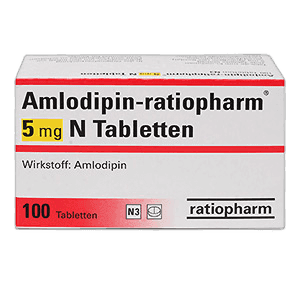
Both are effective calcium channel blockers. Amlodipine has a longer half-life and more study data. Felodipine has higher vascular selectivity. The choice depends on individual factors. Amlodipine causes edema more often, while felodipine has a stronger grapefruit interaction.
Similar Medications
Is Felodipine right for you?
A licensed doctor will review your information and issue a prescription if suitable. Discreet and secure.
Important Notice
This information does not replace medical advice. If you have questions about your health or the suitability of this medication, please consult a doctor or pharmacist.
Important Safety Information
This service operates under German pharmaceutical law (HWG). For risks and side effects, read the package leaflet and consult your doctor or pharmacist. All medications are dispensed from a licensed pharmacy in Germany.