



Overview
In this section you will get an overview of the condition and its relevance to your health.
Menopausal symptoms vary greatly. At deinrezept, you can request treatment online: you complete a medical questionnaire, your answers undergo an individual medical review, and a prescription is only issued if it is medically appropriate. With a hormone-dependent cancer, after a heart attack or stroke and during pregnancy, online treatment is not possible; unexplained bleeding always needs a gynaecological examination. Without a gynaecological examination, including a breast examination, in the last 12 months, an online request is not possible.
Menopause — medically known as the climacteric — is a natural phase in every woman's life. It usually begins between the ages of 45 and 55 and involves hormonal changes that can cause physical and emotional symptoms.
Many women experience menopause very differently: while some have hardly any symptoms, others suffer significantly from hot flashes, sleep disturbances, or mood swings. These symptoms are real and should be taken seriously.
Whether and which therapy options may be suitable is assessed individually as part of a medical consultation -- also available online.
What is it?
Here you will learn what medically characterizes this condition and how it is defined.
Menopause describes the transition from the fertile phase to the final cessation of menstruation. The cause is the declining function of the ovaries and the associated decrease in female hormones, particularly estrogen and progesterone.
Several phases are distinguished:
- Premenopause: Beginning of hormonal fluctuations
- Perimenopause: Period around the last menstrual bleeding
- Postmenopause: Period after menopause
The hormone deficiency affects numerous organ systems, including the cardiovascular system, bone metabolism, mucous membranes, and the nervous system.

Your treatment starts here
Fill out the medical questionnaire – a licensed doctor will review your information and issue a prescription if appropriate.
Causes
The following information explains which factors can contribute to the development of this condition.
The cause of menopausal symptoms lies in the declining hormone production of the ovaries.
Estrogen deficiency is the main factor for many typical symptoms such as hot flashes, sweating, and mucosal changes.
Hormonal fluctuations during the transition phase can cause cycle irregularities, breast tenderness, or mood swings.
Individual factors such as genetic predisposition, stress, lifestyle, and pre-existing conditions influence how strongly symptoms are perceived.
Surgical procedures, such as removal of the ovaries, can also lead to an abrupt onset of menopause.
Symptoms
This section describes the typical signs and symptoms you should watch for.
Symptoms during menopause are varied and can manifest with different intensity.
Common physical symptoms include:
- Hot flashes and sweating
- Sleep disturbances
- Heart palpitations
- Weight gain
Psychological symptoms may include:
- Mood swings
- Irritability
- Depressive mood
- Concentration problems
Urogenital symptoms include:
- Vaginal dryness
- Pain during intercourse
- Frequent urge to urinate or recurring urinary tract infections
Warning signs that should be medically evaluated include heavy bleeding, persistent depressive symptoms, or suddenly occurring complaints.

Ready for the next step?
Start your online consultation now – discreet, secure and supervised by licensed doctors.
Diagnosis
Below you will learn how this condition is detected through medical examinations.
The diagnosis of menopause is based primarily on typical symptoms and the woman's age.
Hormone tests are not necessary in most cases but can be useful for unclear symptoms or very early onset. These include FSH and estrogen levels, among others.
A gynecological examination serves to rule out other causes of bleeding disorders or symptoms.
An online consultation can also be used to systematically record symptoms and discuss possible treatment options.
Treatment
Here the available therapy options and their modes of action are explained.
Treatment of menopausal symptoms depends on the type and severity of symptoms as well as individual risk factors.
Hormone replacement therapy (HRT) is a prescription-only treatment option for menopausal symptoms. Depending on the situation, estrogens alone or in combination with progestogens are used. Suitability and dosage are assessed individually by a doctor. Possible side effects include breast tenderness or light bleeding.
Local estrogens are used for vaginal dryness and act directly on site with low systemic burden.
Non-hormonal therapies include herbal preparations, low-dose antidepressants, or certain blood pressure medications that can reduce hot flashes.
Important contraindications for systemic HRT include:
- Breast cancer or hormone-dependent tumors
- Unexplained vaginal bleeding
- Previous thrombosis or embolism
The decision for or against hormone therapy should always be made individually with medical guidance.
Is hormone therapy right for me?
- It is only started for symptoms that impair quality of life.
- The lowest effective dose is used for the shortest possible time; benefits and risks are reassessed at least once a year, and treatment continues only as long as the benefit outweighs the risks.
- Before starting, a complete personal and family history and a physical examination guided by it, including the pelvis and breasts, are part of the process; during treatment, regular check-ups and the usual screening such as mammography are recommended. An online request does not replace these examinations; at deinrezept it is not possible without a gynaecological examination, including a breast examination, in the last 12 months.
- If the womb is still present, an oestrogen is combined with a progestogen, because oestrogen alone increases the risk of thickening and cancer of the lining of the womb.
When is online treatment not enough?
- Unexplained vaginal bleeding, including bleeding after the menopause
- Bleeding during hormone therapy that persists after the first months or starts later on
- Breast cancer or another hormone-dependent tumour, including in the past or if suspected
- Thrombosis, pulmonary embolism, heart attack, angina pectoris or stroke, including in your history
- During treatment: jaundice or worsening liver values, a marked rise in blood pressure, new migraine-like headaches or pregnancy – according to the summary of product characteristics, therapy must then be stopped immediately
Available medications
Various prescription medications are available for treatment. Click on a medication to learn more about its effects, dosage and side effects.
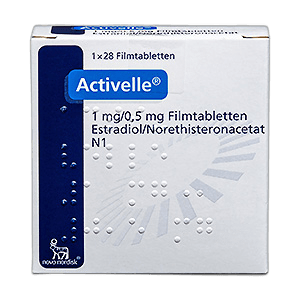
Activelle
Estradiol 1 mg, Norethisteronacetat 0,5 mg

Cliovelle®
Estradiol 1 mg, Norethisteronacetat 0,5 mg

Estramon conti
Estradiol 30 µg/24 h und Norethisteronacetat 95 µg/24 h
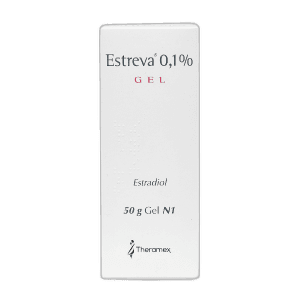
Estreva
Estradiol 0,1%
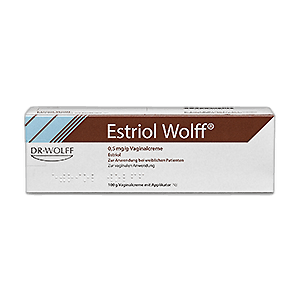
Estriol Wolff®
Estriol

Famenita
Progesteron (mikronisiert) 100 mg / 200 mg
Prevention
This section provides guidance on prevention and reducing risk factors.
A healthy lifestyle can positively influence menopausal symptoms.
Regular exercise, a balanced diet, and stress reduction help reduce weight gain and mood swings. Quitting smoking also has a beneficial effect.
For osteoporosis prevention, adequate calcium and vitamin D intake as well as strength training are particularly important.

Why deinrezept.de?
Licensed doctors
Your information is reviewed by licensed doctors.
Data protection
Your data is SSL-encrypted and processed in compliance with GDPR.
Medically reviewed
All content is regularly reviewed and updated by medical specialists.
FAQ
Here you will find answers to frequently asked questions on this topic.
Menopause can last several years. The most intense symptoms usually occur during perimenopause and often diminish significantly afterward.
No, menopause is a natural phase of life. However, prescription-only therapy options exist for symptoms -- a medical consultation can clarify suitability.
With the right indication and medical supervision, the benefits outweigh the risks for many women. Risks must be weighed individually.
Yes, an initial consultation and assessment of possible treatment options is also possible through an online consultation.
Telemedical treatment is also an option for assessing symptoms and for a prescription: at deinrezept, after a medical questionnaire, an individual medical review determines whether a treatment is suitable; a video consultation is available as a separate service. This does not replace the physical examination before starting hormone therapy or the check-ups and screening appointments during treatment. Without a gynaecological examination, including a breast examination, in the last 12 months, an online request is not possible. Unexplained bleeding always requires an in-person examination.
As short as possible and at the lowest effective dose. According to the summary of product characteristics, benefits and risks are reassessed at least once a year; treatment only continues as long as the benefit outweighs the risks.
Do not change or stop treatment on your own; discuss it with your doctor. According to the summary of product characteristics, it must be stopped immediately in the event of jaundice or worsening liver function, a marked rise in blood pressure, new migraine-like headaches and pregnancy.
Irregular cycles are common during the transition. Heavy or unusual bleeding, bleeding after the menopause and bleeding that persists after the first months of hormone therapy or starts later, on the other hand, must be investigated by a doctor – online treatment does not replace this.
Hormone replacement therapy does not protect against pregnancy: according to the summary of product characteristics of an estradiol gel, it has no contraceptive effect, and if contraception is needed, a non-hormonal method is named. Whether you still need contraception in your situation is clarified in medical consultation.
Would you like a medical assessment?
Fill out the medical questionnaire. A licensed doctor will review your information and recommend a suitable therapy if appropriate.
Important notice
This content is for general information only. In case of severe pain, shortness of breath, impaired consciousness, fever > 39°C or rapidly worsening symptoms, please seek immediate medical help (Emergency 112).
Related treatments
More treatments from the Women's Health area that might interest you.
Contraception
A brief check of the key data – then a suitable option can be selected.
Facial Hair
We ask a few targeted questions to identify possible causes and suitable options.
Bacterial Vaginosis
A short questionnaire helps to capture typical symptoms and possible exclusion criteria.
Urinary Tract Infection
We check symptoms and warning signs so that a suitable recommendation can be safely made.