
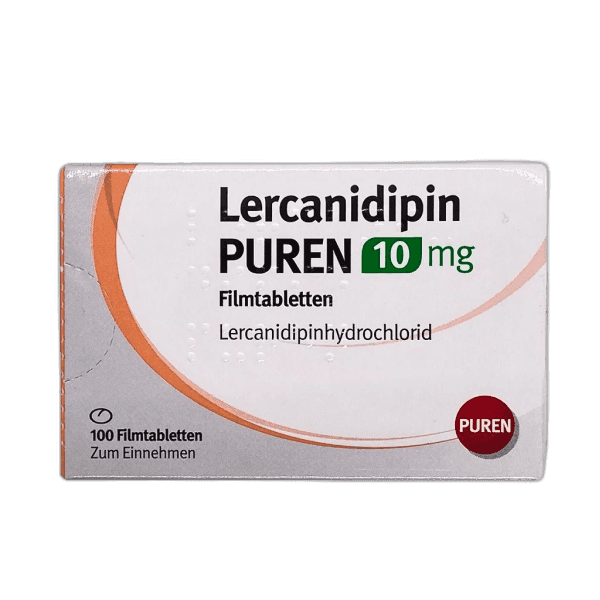
What is Lercanidipine?
Lercanidipine is a third-generation calcium channel blocker of the dihydropyridine type. It is characterized by high lipophilicity (fat solubility), which leads to slow, steady accumulation in the blood vessel walls.
A key advantage over amlodipine: lercanidipine causes ankle edema considerably less often. This makes it particularly suitable for patients who suffer from this typical side effect of calcium channel blockers.
Lercanidipine is available as a single-ingredient product and in combination with enalapril (Enalapril/Lercanidipin-ratiopharm). It is taken once daily.
Active Ingredients & Mechanism of Action
Active ingredient: Lercanidipin
Lercanidipine blocks voltage-dependent L-type calcium channels in the vascular muscle:
Mechanism of action:
- Blocks the influx of calcium into vascular smooth muscle cells
- Arteries and arterioles dilate
- Peripheral vascular resistance decreases
- Blood pressure falls
Special features (3rd generation):
- Extremely high lipophilicity
- Slow accumulation in the cell membranes of the vessel wall
- Steady, slow onset of action
- No reflex increase in heart rate
- Less edema due to even dilation of the blood vessels
Advantages over amlodipine:
- Considerably less ankle edema
- Less facial redness (flushing)
- Lower reflex activation of the sympathetic nervous system
- Renal vasodilation (kidney protection)
Onset of action: Peak plasma levels after 1.5-3 hours. Due to storage in the membranes, the effect lasts 24 hours.
Who is it suitable for?
Lercanidipine is suitable for:
- Adults with mild to moderate high blood pressure
Particularly recommended for:
- Patients with ankle edema while taking amlodipine
- Patients who develop flushing while taking nifedipine
- In combination with ACE inhibitors (enalapril)
- Older patients
Not suitable:
- Severe heart failure (NYHA III-IV)
- Unstable angina pectoris
- Severe aortic stenosis
- Within 4 weeks after a heart attack
- Severe liver or kidney impairment
- Pregnancy and breastfeeding
Available Dosages
High blood pressure:
- Usual dose: 10 mg once daily
- If needed, increase to 20 mg once daily
- Maximum dose: 20 mg daily
In older patients:
- Starting dose: 10 mg once daily
- No dose adjustment needed if organ function is normal
Available strengths:
- 10 mg, 20 mg tablets
Combination product:
- Lercanidipine + enalapril (Enalapril/Lercanidipin-ratiopharm)
Dosage form and pack sizes
The medicines catalogue lists 2 pack variants: 2 strengths in one pack size.
- Dosage form
- Filmtablette
- Strengths
- 10 mg, 20 mg
- Pack sizes
- 50 units
| Strength | Pack | PZN | Duration |
|---|---|---|---|
| 10 mg | 50 units | 10042198 | 50 days |
| 20 mg | 50 units | 10042235 | 50 days |
Packs listed in the German medicines catalogue. Which of them are currently available and what they cost is shown in the price overview.
The Pharmazentralnummer (PZN) is the nationwide unique identifier of a pack in Germany.
Duration is the catalogue value for the usual dosage. How long a pack actually lasts depends on the dose your doctor prescribes.
How to Take
How to take:
- Once daily, preferably in the morning
- Take at least 15 minutes before a meal
- Swallow with sufficient water
- NO grapefruit juice (inhibits breakdown)
Important – take on an empty stomach: Lercanidipine should be taken before eating, because a high-fat meal can increase absorption fourfold. This can lead to an undesirably strong drop in blood pressure.
Notes:
- No alcohol close to the time of taking it (increased vasodilation)
- Regular blood pressure checks
- No abrupt discontinuation needed (but consult your doctor)
Contraindications
Lercanidipine must not be taken in cases of:
- Hypersensitivity to lercanidipine or other dihydropyridines
- Severe heart failure (NYHA III-IV)
- Unstable angina pectoris
- Severe aortic stenosis
- Within 4 weeks after a heart attack
- Severe liver or kidney impairment (GFR below 30 ml/min)
- Pregnancy and breastfeeding
- At the same time as strong CYP3A4 inhibitors (ketoconazole, itraconazole, ritonavir)
- At the same time as cyclosporine
Caution in cases of:
- Sick sinus syndrome (without a pacemaker)
- Left ventricular dysfunction
- Mild to moderate kidney or liver impairment
Pregnancy: Contraindicated. There are insufficient data on safety during pregnancy.
Possible Side Effects
Common (1-10%):
- Headache
- Facial redness (flushing) – less frequent than with amlodipine
- Palpitations
- Ankle edema – considerably less frequent than with amlodipine (approx. 1-2% vs. 10-15%)
Uncommon (0.1-1%):
- Dizziness
Rare:
- Gastrointestinal complaints
- Fatigue
- Skin rash
- Muscle pain
- Chest pain
Very rare:
- Angina pectoris
- Syncope (fainting)
- Gingival hyperplasia (overgrowth of the gums)
- Elevated liver enzymes
- Increased urge to urinate
Advantage: The rate of ankle edema is significantly lower with lercanidipine than with amlodipine or nifedipine. This is the main reason for choosing lercanidipine.
Interactions
Contraindicated with:
- Strong CYP3A4 inhibitors (ketoconazole, itraconazole, ritonavir)
- Cyclosporine (mutual increase in blood levels)
Caution with:
- Moderate CYP3A4 inhibitors (erythromycin, fluconazole)
- CYP3A4 inducers (rifampicin, phenytoin, carbamazepine) → reduced effect
- Digoxin → slight increase in blood levels
- Simvastatin → close monitoring
- Beta blockers → stronger lowering of blood pressure (usually desired)
- Cimetidine → increased lercanidipine levels
Grapefruit: Grapefruit juice inhibits CYP3A4 and can considerably increase lercanidipine levels. Avoid grapefruit juice!
Alcohol: Alcohol enhances the vasodilating effect. Avoiding it close to the time of taking the medication is recommended.
Frequently Asked Questions
Yes, that is the main advantage of lercanidipine. Studies show an edema rate of only 1-2% compared with 10-15% with amlodipine. The reason: lercanidipine accumulates slowly in the vessel walls and leads to more even dilation of the blood vessels without the pressure gradient that causes edema.
A high-fat meal can increase the absorption of lercanidipine fourfold. This leads to unpredictably high levels of the active ingredient and a stronger drop in blood pressure. Therefore, take lercanidipine at least 15 minutes before breakfast.
Yes, switching is readily possible, especially if ankle edema occurs while taking amlodipine. Your doctor will determine the appropriate dose. As a guide: 5 mg of amlodipine corresponds approximately to 10 mg of lercanidipine in terms of the blood-pressure-lowering effect.
Similar Medications
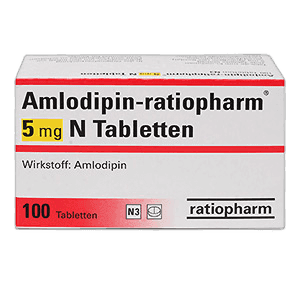
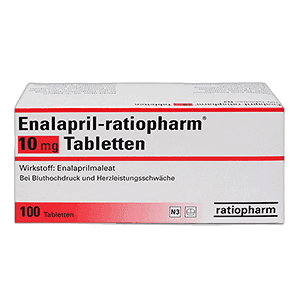
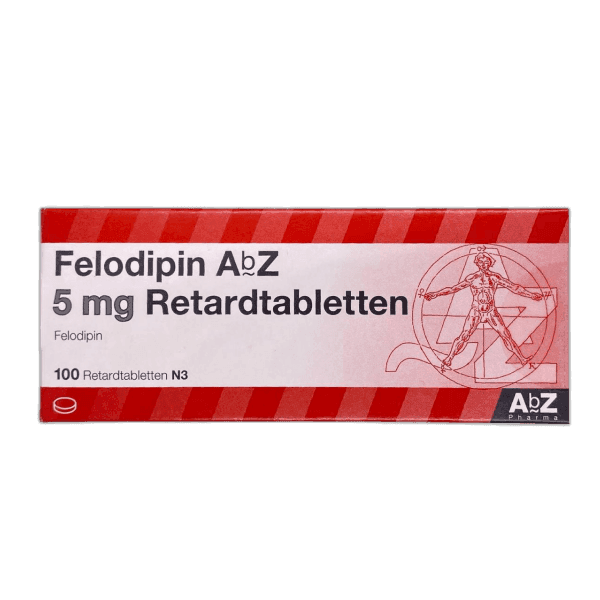
Is Lercanidipine right for you?
A licensed doctor will review your information and issue a prescription if suitable. Discreet and secure.
Important Notice
This information does not replace medical advice. If you have questions about your health or the suitability of this medication, please consult a doctor or pharmacist.
Important Safety Information
This service operates under German pharmaceutical law (HWG). For risks and side effects, read the package leaflet and consult your doctor or pharmacist. All medications are dispensed from a licensed pharmacy in Germany.