
What is Erythromycin Gel?
Erythromycin is a macrolide antibiotic used for the local treatment of acne. It acts against the acne bacterium Propionibacterium acnes and reduces inflammation.
The antibiotic is available in various formulations: gel, solution and in combination with other active ingredients. To prevent resistance, it should ideally be used together with benzoyl peroxide.
Erythromycin gel is particularly suitable for sensitive skin and causes less irritation than benzoyl peroxide or retinoids.
Active Ingredients & Mechanism of Action
Active ingredient: Erythromycin 2-4%
Erythromycin has antibacterial and anti-inflammatory effects:
Antibacterial effect:
- Inhibits bacterial protein synthesis
- Binds to the 50S subunit of the ribosomes
- Acts bacteriostatically against P. acnes
- Reduces the number of bacteria in the follicles
Anti-inflammatory effect:
- Inhibits pro-inflammatory cytokines
- Reduces redness and swelling
- Independent of the antibacterial effect
The problem of resistance development: Due to frequent use, many P. acnes strains have become resistant. Combining it with benzoyl peroxide prevents this and increases effectiveness.
Who is it suitable for?
Erythromycin gel is suitable for:
- Mild to moderate inflammatory acne
- Patients with sensitive skin
- Use in combination with other acne medications
- An alternative in case of intolerance to other preparations
Advantages:
- Well tolerated
- Minimally irritating
- Suitable for sensitive skin
- Anti-inflammatory
Limitations:
- Development of resistance when used alone
- Less effective than combination preparations
- Not for purely comedonal acne
Available Dosages
Erythromycin gel/solution:
- Concentration: 2% or 4%
- Apply to the affected areas 2x daily
Combination preparations:
- Erythromycin + isotretinoin (Isotrexin®)
- Erythromycin + zinc (Zineryt®)
- Erythromycin + tretinoin
Pack sizes:
- 25 g, 30 g, 50 g tube
- Solutions 30 ml, 50 ml
How to Take
Application: 1. Cleanse the skin thoroughly 2. Allow it to dry completely 3. Apply thinly to the affected areas 4. Use in the morning and evening 5. Allow to absorb
Duration of treatment:
- Improvement after 4-6 weeks
- Maximum treatment: 6 weeks
Important notes:
- Do not use alone (risk of resistance)
- Ideally erythromycin in the evening, benzoyl peroxide in the morning
- Not when using oral erythromycin
Contraindications
Do not use in case of:
- Hypersensitivity to erythromycin or macrolides
- In the area of the eyes and mucous membranes
Use with caution in case of:
- Concurrent intake of oral erythromycin or clindamycin
- Atopic skin
Pregnancy and breastfeeding: Can be used. Low systemic absorption.
Possible Side Effects
Common:
- Dry skin
- Mild burning
- Scaling
- Itching
Uncommon:
- Skin redness
- Skin irritation
- Contact dermatitis
Rare:
- Allergic reactions
After prolonged treatment:
- Worsening of the skin condition due to development of resistance
Note: Erythromycin gel is well tolerated and causes little irritation.
Interactions
Do not combine with:
- Clindamycin (topical) – antagonistic effect possible
- Erythromycin (oral) – increased risk of resistance
Useful combinations:
- With benzoyl peroxide (apply at different times)
- With retinoids (at different times)
Recommended use: Benzoyl peroxide in the morning, erythromycin in the evening – or vice versa.
Frequently Asked Questions
Benzoyl peroxide prevents the development of antibiotic resistance and enhances the effect. Used alone, erythromycin often loses its effectiveness after a few months.
Erythromycin gel should be used for a maximum of 6 weeks at a time because of the risk of resistance. After that, continue treatment with non-antibiotic agents.
Yes, erythromycin causes less skin irritation and is better suited for sensitive skin. However, its effectiveness when used alone is lower.
Similar Medications
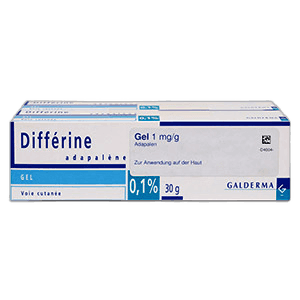
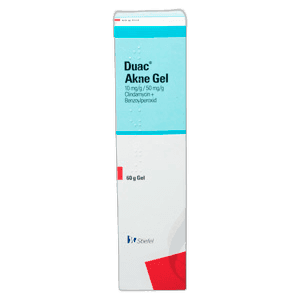
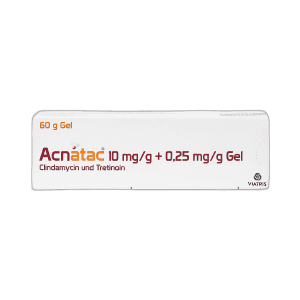
Is Erythromycin Gel right for you?
A licensed doctor will review your information and issue a prescription if suitable. Discreet and secure.
Important Notice
This information does not replace medical advice. If you have questions about your health or the suitability of this medication, please consult a doctor or pharmacist.
Important Safety Information
This service operates under German pharmaceutical law (HWG). For risks and side effects, read the package leaflet and consult your doctor or pharmacist. All medications are dispensed from a licensed pharmacy in Germany.