
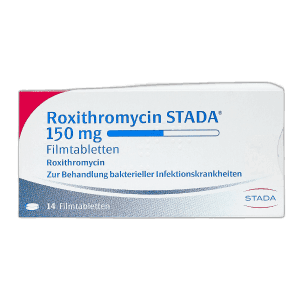
What is Roxithromycin?
Roxithromycin is a macrolide antibiotic used for various bacterial infections. Among other things, it is used for respiratory tract infections, skin and soft tissue infections, and infections of the urogenital tract.
For gynecological infections, roxithromycin can be used as an alternative, especially in mixed infections with atypical pathogens (chlamydia, mycoplasma) or in cases of intolerance to penicillins and metronidazole.
Active Ingredients & Mechanism of Action
Active ingredient: Roxithromycin
Mechanism of action:
- Inhibits bacterial protein synthesis
- Binds to the 50S subunit of the ribosome
- Bacteriostatic (partly bactericidal at high concentrations)
Spectrum of activity:
- Gram-positive bacteria (streptococci, staphylococci)
- Atypical pathogens: Chlamydia trachomatis, Mycoplasma, Ureaplasma
- Some gram-negative pathogens
Pharmacokinetics:
- Good tissue penetration
- Long half-life (approx. 12 hours)
- Taken once or twice daily
Who is it suitable for?
Roxithromycin is suitable for:
- Infections with atypical pathogens (chlamydia, mycoplasma)
- Patients with a penicillin allergy (as an alternative)
- Respiratory tract infections, skin and soft tissue infections
- Urethritis (non-gonococcal)
Not suitable:
- Severe hepatic insufficiency
- Concomitant use of ergotamine
- Hypersensitivity to macrolides
Available Dosages
Standard dosage:
- 150 mg twice daily for 7–14 days
- Or 300 mg once daily
Available strengths:
- 150 mg, 300 mg tablets
Dose adjustment:
- In severe hepatic insufficiency: half the dose or an alternative medication
Dosage form and pack sizes
The medicines catalogue lists 2 pack variants: one strength in 2 pack sizes. Pack sizes range from 7 to 14 units.
- Dosage form
- Filmtablette
- Strengths
- 300 mg
- Pack sizes
- 7 units, 14 units
| Strength | Pack | PZN | Duration |
|---|---|---|---|
| 300 mg | 7 units | 02197432 | 0 days |
| 300 mg | 14 units | 08457578 | 0 days |
Packs listed in the German medicines catalogue. Which of them are currently available and what they cost is shown in the price overview.
The Pharmazentralnummer (PZN) is the nationwide unique identifier of a pack in Germany.
Duration is the catalogue value for the usual dosage. How long a pack actually lasts depends on the dose your doctor prescribes.
How to Take
How to take:
- Take before meals (15 minutes before eating)
- Taking it on an empty stomach improves absorption
- Swallow the tablet whole with water
Important notes:
- Complete the full course of treatment
- Do not stop early
- Contact a doctor if you develop a skin rash or liver problems
Contraindications
Roxithromycin must not be taken in cases of:
- Hypersensitivity to macrolides
- Concomitant use of ergotamine/dihydroergotamine
- Concomitant use of astemizole, cisapride, pimozide
Use with caution in:
- Liver disease: Use is not recommended. If it is nevertheless necessary, liver values are monitored. In severe hepatic insufficiency, the daily dose is halved.
- QT prolongation
- Myasthenia gravis
Possible Side Effects
Common (1–10%):
- Nausea, abdominal pain
- Diarrhea
- Headache
- Dizziness
Uncommon (0.1–1%):
- Skin rash
- Elevated liver enzymes
- Taste disturbances
- Candidiasis
Rare:
- Hepatitis
- QT prolongation
- Severe allergic reactions
General: Roxithromycin is generally well tolerated, better than erythromycin with regard to gastrointestinal complaints.
Interactions
Do not take together with:
- Ergot alkaloids such as ergotamine or dihydroergotamine (risk of increased vasoconstriction)
- Medicines with a narrow therapeutic range that are broken down via CYP3A4, in particular astemizole, cisapride, pimozide and terfenadine (risk of heart rhythm disorders and QT prolongation)
Particular caution with medicines that prolong the QT interval:
- Antiarrhythmics such as quinidine, procainamide, disopyramide, amiodarone or dofetilide
- Citalopram, tricyclic antidepressants, methadone
- Neuroleptics such as phenothiazines
- Fluoroquinolones such as moxifloxacin
- Antifungals such as fluconazole or pentamidine
- Antiviral medicines such as telaprevir
Monitoring or caution needed with:
- Vitamin K antagonists such as warfarin: In isolated cases, the anticoagulant effect can be increased. Monitoring of clotting values (Quick value, INR) is advisable.
- Digoxin and other cardiac glycosides: Very rarely, the toxicity of the cardiac glycosides can be increased. ECG monitoring and, if possible, monitoring of blood levels.
- Disopyramide: ECG monitoring and, if possible, monitoring of blood levels.
- Statins: Possible risk of muscle-related side effects such as rhabdomyolysis. Watch out for muscle complaints.
- Theophylline: The theophylline level can rise and should be monitored.
- Ciclosporin: The ciclosporin level can rise. Levels and kidney function should be monitored.
- Midazolam, bromocriptine, rifabutin: The blood levels of these active substances can rise.
Contraceptive pill:
- In rare cases, especially with vomiting or diarrhea, the effect of the pill may be unreliable. It is advisable to use an additional non-hormonal method of contraception during treatment.
Frequently Asked Questions
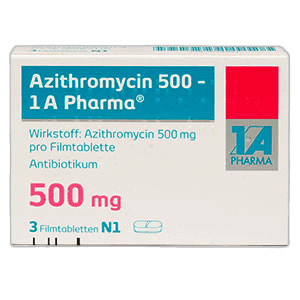
Azithromycin is usually the first choice for chlamydia and mycoplasma infections. Roxithromycin is used as an alternative in cases of intolerance or when azithromycin is not available. Both belong to the macrolide group.
Food reduces the absorption of roxithromycin. Take it 15 minutes before eating so that the active ingredient is optimally absorbed.
Yes, macrolides such as roxithromycin are a common alternative for people with a penicillin allergy. They belong to a different class of antibiotics and show no cross-allergy with penicillins.
Similar Medications
Is Roxithromycin right for you?
A licensed doctor will review your information and issue a prescription if suitable. Discreet and secure.
Important Notice
This information does not replace medical advice. If you have questions about your health or the suitability of this medication, please consult a doctor or pharmacist.
Important Safety Information
This service operates under German pharmaceutical law (HWG). For risks and side effects, read the package leaflet and consult your doctor or pharmacist. All medications are dispensed from a licensed pharmacy in Germany.