
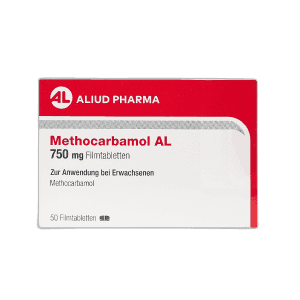
What is Methocarbamol?
Methocarbamol is a centrally acting muscle relaxant used to treat painful muscle tension. A brand-name product containing this active ingredient is Ortoton®. Methocarbamol is frequently used for acute back pain with muscle hardening.
The active ingredient relaxes the skeletal muscles without severely impairing voluntary motor function. It acts via the central nervous system and reduces pathologically increased muscle tension.
Methocarbamol is usually used as a concomitant medication together with pain relievers and physical therapy.
Active Ingredients & Mechanism of Action
Active ingredient: Methocarbamol
Methocarbamol has a central muscle-relaxing effect:
Mechanism of action:
- Inhibits polysynaptic reflexes in the spinal cord and brainstem
- Reduces pathologically increased muscle tone
- Breaks the vicious cycle of pain – tension – pain
Special feature:
- Acts primarily on excessive muscle tension
- Normal muscle strength is largely preserved
- Less sedation than other muscle relaxants
Pharmacokinetics:
- Onset of action: approx. 30 minutes
- Half-life: 1–2 hours
- Metabolized in the liver
Who is it suitable for?
Methocarbamol is suitable for:
- Acute painful muscle tension
- Back pain with a muscular component
- Neck and shoulder tension
- Lumbago (acute low back pain)
- Muscle cramps after injuries
Recommended as:
- Adjunctive therapy to analgesics
- A supplement to physical therapy
- Short-term treatment (max. 2–3 weeks)
Not suitable:
- In myasthenia gravis
- In epilepsy
- For children and adolescents
Available Dosages
Tablets:
- 750 mg
Usual dosage (adults):
- Initial dose: 3 × 2 tablets (4500 mg/day) for 2–3 days
- Maintenance dose: 3 × 1 tablet (2250 mg/day)
Duration of treatment:
- Usually 2–3 weeks
- Not intended for long-term use
Note: The initial dose is deliberately high in order to break the tension cycle quickly.
Dosage form and pack sizes
The medicines catalogue lists 2 pack variants: one strength in 2 pack sizes. Pack sizes range from 20 to 50 units.
- Dosage form
- Filmtablette
- Strengths
- 750 mg
- Pack sizes
- 20 units, 50 units
| Strength | Pack | PZN | Duration |
|---|---|---|---|
| 750 mg | 20 units | 14179770 | 0 days |
| 750 mg | 50 units | 14043645 | 0 days |
Packs listed in the German medicines catalogue. Which of them are currently available and what they cost is shown in the price overview.
The Pharmazentralnummer (PZN) is the nationwide unique identifier of a pack in Germany.
Duration is the catalogue value for the usual dosage. How long a pack actually lasts depends on the dose your doctor prescribes.
How to Take
How to take:
- Swallow the tablets whole with sufficient water
- With or without food
- 3 times daily at regular intervals
Important notes:
- Your ability to drive may be impaired
- No alcohol during treatment (increased sedation)
- May turn the urine dark (harmless)
- Do not drive if you experience dizziness or fatigue
Contraindications
Methocarbamol must not be taken in cases of:
- Hypersensitivity to methocarbamol
- Myasthenia gravis
- Comatose or precomatose states
- Diseases of the central nervous system
- A tendency to epileptic seizures
Caution in:
- Hepatic insufficiency
- Impaired renal function
- Elderly patients (risk of falls)
Pregnancy/breastfeeding: Not recommended due to insufficient data.
Possible Side Effects
Rare (0.01 to 0.1%):
- Headache, dizziness, metallic taste
- Low blood pressure (hypotension)
- Inflammation of the conjunctiva (conjunctivitis)
- Swelling of the nasal mucosa
- Skin reactions (angioedema, rash, itching, hives)
- Fever
Very rare (less than 0.01%):
- Anaphylactic reactions
- Decreased appetite
- Restlessness, anxiety, confusion
- Fainting (syncope), involuntary eye movements (nystagmus), light-headedness, trembling (tremor), seizures
- Deterioration of vision, double vision
- Bradycardia (slowed heartbeat)
- Hot flushes
- Retching, vomiting
Frequency not known:
- Drowsiness (somnolence), fatigue
- Coordination disorders
- Temporary sensory disturbances (hypoaesthesia, paraesthesia), mainly on the head, mouth, hands or feet
- Nausea, diarrhoea
Urine discoloration: May turn the urine brown, black, or greenish – this is harmless.
Interactions
Increased sedation with:
- Alcohol
- Benzodiazepines
- Opioids
- Antihistamines
- Tricyclic antidepressants
Other:
- Pyridostigmine: effect may be weakened (myasthenia gravis)
- Centrally acting medications in general: mutual potentiation of effects
Note: Methocarbamol has relatively few clinically relevant interactions compared with other muscle relaxants.
Frequently Asked Questions
The high initial dose (3 × 1500 mg) is intended to break the tension cycle quickly. After 2–3 days, the dose is reduced to the lower maintenance dose.
Methocarbamol can cause dizziness and fatigue, especially at the beginning of treatment. During the first few days, you should not drive or operate machinery until you know how you react to the medication.
Yes, the combination is common and useful. The muscle relaxant relieves the tension, and the pain reliever alleviates the pain. The two medications complement each other well.
Similar Medications
Is Methocarbamol right for you?
A licensed doctor will review your information and issue a prescription if suitable. Discreet and secure.
Important Notice
This information does not replace medical advice. If you have questions about your health or the suitability of this medication, please consult a doctor or pharmacist.
Important Safety Information
This service operates under German pharmaceutical law (HWG). For risks and side effects, read the package leaflet and consult your doctor or pharmacist. All medications are dispensed from a licensed pharmacy in Germany.