
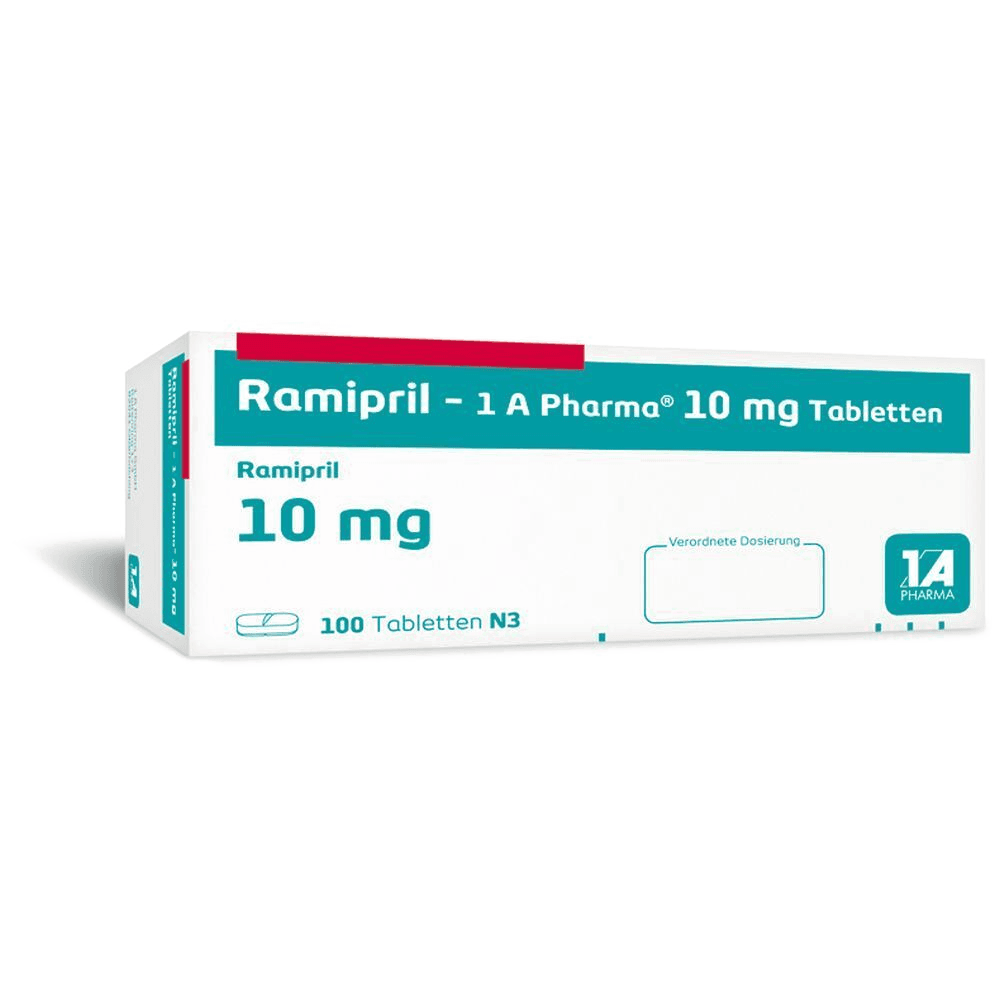
What is Ramipril?
Ramipril is an ACE inhibitor (angiotensin-converting enzyme inhibitor). It is used to treat high blood pressure (hypertension) and heart failure and to protect the kidneys in people with diabetes.
The active ingredient lowers blood pressure while also protecting the heart, blood vessels and kidneys from the long-term damage caused by high blood pressure. Ramipril is taken once daily and is available as a generic from numerous manufacturers, including Ramipril-1 A Pharma®, Ramipril HEXAL® and Ramipril-ratiopharm®.
Ramipril is also available in combination products with amlodipine or hydrochlorothiazide (HCT).
Active Ingredients & Mechanism of Action
Active ingredient: Ramipril
Ramipril acts on the renin-angiotensin-aldosterone system (RAAS):
Mechanism of action:
- Inhibits the angiotensin-converting enzyme (ACE)
- As a result, less angiotensin II is formed
- Angiotensin II is a potent vasoconstrictor
- Less angiotensin II means: blood vessels widen, blood pressure falls
Additional effects:
- Reduces the release of aldosterone (less water and salt retention)
- Inhibits the breakdown of bradykinin (vasodilating)
- Protects the heart and kidneys from structural changes (remodeling)
- Improves the function of the inner lining of the blood vessels (endothelium)
Onset of action: The blood pressure-lowering effect begins after 1-2 hours. The maximum effect is reached after 3-6 hours. A stable reduction in blood pressure is achieved after 3-4 weeks of taking it regularly.
Who is it suitable for?
Ramipril is suitable for:
- Adults with high blood pressure (arterial hypertension)
- Patients with heart failure
- Follow-up treatment after a heart attack
- Patients with diabetic nephropathy (kidney protection)
- Cardiovascular prevention in high-risk patients
Especially recommended for:
- Diabetes with high blood pressure
- Heart failure
- After a heart attack
- Protein in the urine (proteinuria)
Not suitable in cases of:
- Pregnancy and breastfeeding
- Bilateral renal artery stenosis
- History of angioedema
- Concomitant use with aliskiren in diabetes
Available Dosages
High blood pressure:
- Starting dose: 2.5 mg once daily
- Usual maintenance dose: 5-10 mg once daily
- Maximum dose: 10 mg daily
Heart failure:
- Starting dose: 1.25 mg once daily
- Slow increase over weeks
- Target dose: 10 mg daily
Available strengths:
- 1.25 mg, 2.5 mg, 5 mg, 10 mg tablets
Combination products:
- Ramipril + amlodipine (e.g., Ramipril HEXAL® plus Amlodipin)
- Ramipril + hydrochlorothiazide (e.g., Ramipril-1 A Pharma® plus)
Dosage form and pack sizes
The medicines catalogue lists 2 pack variants: 2 strengths in one pack size.
- Dosage form
- Tablette
- Strengths
- 5 mg, 10 mg
- Pack sizes
- 100 units
| Strength | Pack | PZN | Duration |
|---|---|---|---|
| 5 mg | 100 units | 00761271 | 100 days |
| 10 mg | 100 units | 00766819 | 100 days |
Packs listed in the German medicines catalogue. Which of them are currently available and what they cost is shown in the price overview.
The Pharmazentralnummer (PZN) is the nationwide unique identifier of a pack in Germany.
Duration is the catalogue value for the usual dosage. How long a pack actually lasts depends on the dose your doctor prescribes.
How to Take
How to take:
- Once daily, always at the same time of day
- Regardless of meals
- Swallow with sufficient water
- Do not chew the tablet
Dose adjustment:
- Start with a low dose
- Increase slowly every 2-4 weeks
- Check blood pressure and kidney values regularly
Important notes:
- Do not stop on your own, only after talking to your doctor
- If you miss a dose: take it if less than 12 hours have passed
- Regular blood pressure checks are recommended
- Avoid potassium-containing salt substitutes
Contraindications
Ramipril must not be taken in cases of:
- Hypersensitivity to ramipril or other ACE inhibitors
- History of angioedema (including hereditary)
- Bilateral renal artery stenosis
- Pregnancy in the second and third trimesters
- Concomitant use with aliskiren in people with diabetes
- Extracorporeal treatments in which the blood comes into contact with negatively charged surfaces (e.g. haemodialysis or haemofiltration with certain high-flux membranes, LDL apheresis with dextran sulfate)
Use with caution in cases of:
- Impaired kidney function (dose adjustment)
- Aortic stenosis or mitral stenosis
- Elevated potassium levels
- Concurrent dialysis
- Collagen diseases (e.g., lupus)
- Liver function disorders
Pregnancy and breastfeeding: Ramipril is not recommended in the first trimester of pregnancy and is contraindicated in the second and third trimesters. During this time it can harm the unborn child, for example by reducing kidney function. Treatment should not be started during pregnancy. If pregnancy is confirmed, treatment must be stopped immediately and, if necessary, switched to another therapy. If you are planning to have a child, treatment should be switched in good time. Ramipril is not recommended during breastfeeding.
Possible Side Effects
Common (1-10%):
- Dry, irritating cough (up to 10% of patients)
- Dizziness, especially at the start
- Headache
- Fatigue
- Elevated potassium levels
Uncommon (0.1-1%):
- Drop in blood pressure (especially with the first dose)
- Kidney function disorders
- Skin rash
- Gastrointestinal complaints
- Taste disturbances
Rare but serious:
- Angioedema (swelling of the face, lips, tongue) – call emergency services immediately!
- Severe drop in blood pressure
- Severe kidney dysfunction
Irritating cough: The dry cough is the most common reason for switching medication. It occurs in about 5-10% of patients and goes away after the medication is stopped. Alternative: switching to an AT1 blocker (sartan).
Interactions
Contraindicated with:
- Aliskiren in diabetes or renal insufficiency
- Sacubitril/valsartan (36-hour interval)
Caution when taken at the same time as:
- Potassium-sparing diuretics (spironolactone, triamterene) – hyperkalemia
- NSAIDs (ibuprofen, diclofenac) – reduced effect, kidney damage
- Lithium – increased lithium levels
- Other blood pressure-lowering medications – enhanced lowering of blood pressure
- Antidiabetic medications – enhanced lowering of blood sugar
Important: Avoid potassium-containing dietary supplements and salt substitutes. Regular monitoring of kidney values and potassium is recommended.
Frequently Asked Questions
The dry, irritating cough is a known side effect of all ACE inhibitors. It is caused by the accumulation of bradykinin in the airways. About 5-10% of patients are affected. If the cough is bothersome, your doctor can switch you to an AT1 blocker (e.g., candesartan, valsartan), which does not cause this cough.
No, never stop taking ramipril on your own. Always talk to your doctor first.
Ramipril is usually taken in the morning. More recent studies show that taking it in the evening can also have benefits, especially if blood pressure does not drop sufficiently at night. Discuss the best timing with your doctor.
NSAIDs such as ibuprofen can weaken the effect of ramipril and increase the risk of kidney damage. Occasional use for pain is usually acceptable, but if you use them regularly, you should inform your doctor. Paracetamol is often the better alternative.
Similar Medications

Is Ramipril right for you?
A licensed doctor will review your information and issue a prescription if suitable. Discreet and secure.
Important Notice
This information does not replace medical advice. If you have questions about your health or the suitability of this medication, please consult a doctor or pharmacist.
Important Safety Information
This service operates under German pharmaceutical law (HWG). For risks and side effects, read the package leaflet and consult your doctor or pharmacist. All medications are dispensed from a licensed pharmacy in Germany.