
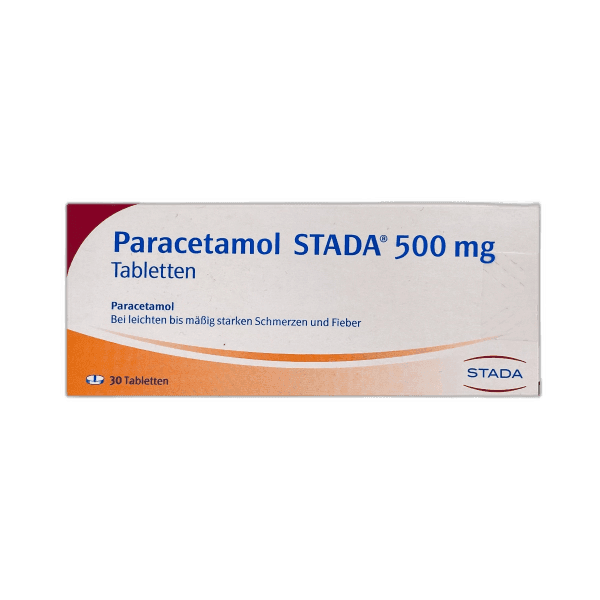
What is Paracetamol?
Paracetamol (acetaminophen) is a pain and fever medication. It relieves pain and reduces fever but, unlike NSAIDs, has no notable anti-inflammatory effect.
The great advantage of paracetamol is its good gastric tolerability. Occasional use has no significant effect on the tendency to bleed. However, repeated use for longer than one week enhances the effect of anticoagulants. During pregnancy, it can be used if clinically necessary.
At low doses, paracetamol is available without a prescription. Higher single doses and combination products (e.g., Talvosilen forte® with codeine) are prescription-only.
Active Ingredients & Mechanism of Action
Active ingredient: Paracetamol
The exact mechanism of action of paracetamol has still not been fully clarified:
Suspected mechanisms:
- Inhibition of prostaglandin synthesis in the central nervous system (CNS)
- Influence on the serotonin system
- Activation of descending pain-inhibiting pathways
- Possible involvement of the endocannabinoid system
Effect profile:
- Analgesic: Pain-relieving (mild to moderate pain)
- Antipyretic: Fever-reducing
- Not antiphlogistic: No relevant anti-inflammatory effect
Pharmacokinetics:
- Onset of action: 30–60 minutes
- Duration of action: 4–6 hours
- Metabolized in the liver
Who is it suitable for?
Paracetamol is suitable for:
- Mild to moderately severe pain
- Headaches
- Toothache
- Fever
- Cold symptoms
- Pain during pregnancy, if clinically necessary
- Patients with stomach disorders (no GI toxicity)
- Patients on anticoagulants, for occasional use (long-term use only under medical supervision)
Not suitable:
- In severe hepatic impairment
- In alcohol dependence (increased liver toxicity)
- For severe inflammatory pain (no anti-inflammatory effect)
Available Dosages
Tablets:
- 500 mg, 1000 mg
Suppositories:
- 500 mg, 1000 mg
Usual dosage (adults):
- 500–1000 mg every 4–6 hours
- Maximum daily dose: 4000 mg (4 g)
In liver disease or underweight:
- Maximum daily dose: 2000 mg (2 g)
Important: The maximum daily dose must not be exceeded – there is a risk of liver damage!
Dosage form and pack sizes
The medicines catalogue lists 5 pack variants: 2 strengths in 4 pack sizes. Pack sizes range from 10 to 50 units.
- Dosage form
- Tablette
- Strengths
- 500 mg, 1000 mg
- Pack sizes
- 10 units, 20 units, 30 units, 50 units
| Strength | Pack | PZN | Duration |
|---|---|---|---|
| 500 mg | 10 units | 01234473 | 0 days |
| 500 mg | 20 units | 01126111 | 0 days |
| 500 mg | 30 units | 04860426 | 0 days |
| 500 mg | 50 units | 08999345 | 0 days |
| 1000 mg | 10 units | 09263936 | 0 days |
Packs listed in the German medicines catalogue. Which of them are currently available and what they cost is shown in the price overview.
The Pharmazentralnummer (PZN) is the nationwide unique identifier of a pack in Germany.
Duration is the catalogue value for the usual dosage. How long a pack actually lasts depends on the dose your doctor prescribes.
How to Take
How to take:
- Take tablets with water
- Regardless of meals
- Minimum interval between single doses: 4–6 hours
Important notes:
- Never exceed the maximum daily dose of 4 g
- Watch out for hidden sources of paracetamol (cold remedies, combination products)
- No alcohol while taking it
- Lower dose in case of liver problems
Overdose – emergency! Even taking the total daily dose all at once can lead to severe liver damage. From approx. 6 g as a single dose (adults), liver cells are destroyed. Call an emergency physician immediately! Antidote: N-acetylcysteine (must be given early).
Contraindications
Paracetamol must not be taken in case of:
- Severe hepatic impairment
- Hypersensitivity to paracetamol
Caution in case of:
- Mild to moderate hepatic impairment
- Chronic alcohol consumption
- Renal impairment
- Underweight / malnutrition (lower glutathione reserves)
- Gilbert's syndrome
Pregnancy: If clinically necessary, paracetamol can be used during pregnancy. It should then be used at the lowest effective dose, for the shortest possible time, as infrequently as possible and not in combination with other medicines.
Breastfeeding: Can be taken at therapeutic doses. Small amounts pass into breast milk. No undesirable effects during breastfeeding are known to date.
Possible Side Effects
When used as directed: Paracetamol is very well tolerated at therapeutic doses.
Rare:
- Allergic skin reactions
- Changes in blood count
- Bronchospasm (in predisposed individuals)
In case of overdose (> 4 g/day):
- Severe liver damage (liver failure possible!)
- Nausea, vomiting
- Symptoms often appear only after 24–48 hours
- Immediate emergency treatment required
Important: Toxicity in overdose is the greatest risk of paracetamol. The therapeutic range is narrow.
Interactions
Relevant interactions:
- Warfarin/Marcumar – with regular use, the INR may increase
- Carbamazepine, phenytoin, rifampicin – accelerated breakdown of paracetamol, increased toxicity
- Alcohol – increased risk of liver damage
- Metoclopramide – accelerated absorption of paracetamol
Advantage: Unlike NSAIDs, no relevant interactions with blood pressure medications, no increased risk of GI bleeding, no effect on platelet function.
Frequently Asked Questions
Paracetamol is broken down in the liver. In an overdose, a toxic metabolite (NAPQI) is formed that destroys liver cells. The liver's glutathione reserves become depleted and can no longer neutralize the toxin. This can lead to liver failure.
Yes, the combination is possible and is even recommended for more severe pain, since the two work through different mechanisms. Observe the respective maximum doses. Ask your doctor about the exact dosage.
Paracetamol inhibits prostaglandin synthesis mainly in the brain, not in peripheral tissue. It therefore works against pain and fever, but not against inflammation in joints or muscles.
If clinically necessary, paracetamol can be used during pregnancy. It should be taken at the lowest effective dose, for as short a time and as infrequently as possible, and not together with other medicines.
Similar Medications
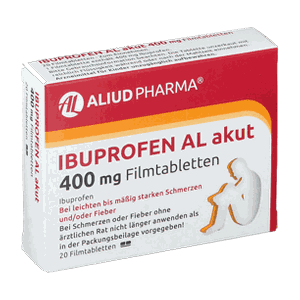
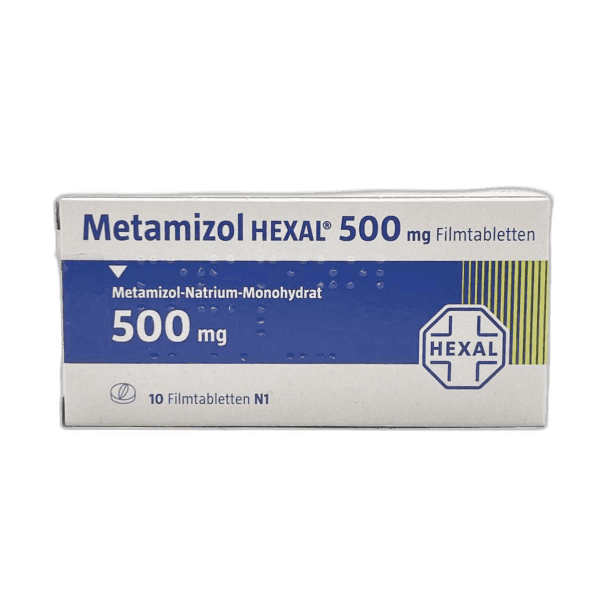
Is Paracetamol right for you?
A licensed doctor will review your information and issue a prescription if suitable. Discreet and secure.
Important Notice
This information does not replace medical advice. If you have questions about your health or the suitability of this medication, please consult a doctor or pharmacist.
Important Safety Information
This service operates under German pharmaceutical law (HWG). For risks and side effects, read the package leaflet and consult your doctor or pharmacist. All medications are dispensed from a licensed pharmacy in Germany.