
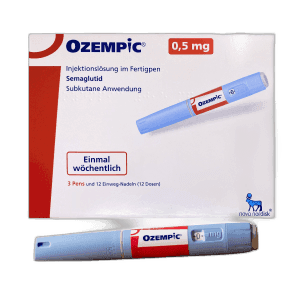
What is Ozempic?
Ozempic is a prescription-only medication from Novo Nordisk containing the active ingredient semaglutide. It was originally developed and approved for the treatment of type 2 diabetes. In recent years, Ozempic has also attracted a great deal of attention as a weight-loss medication.
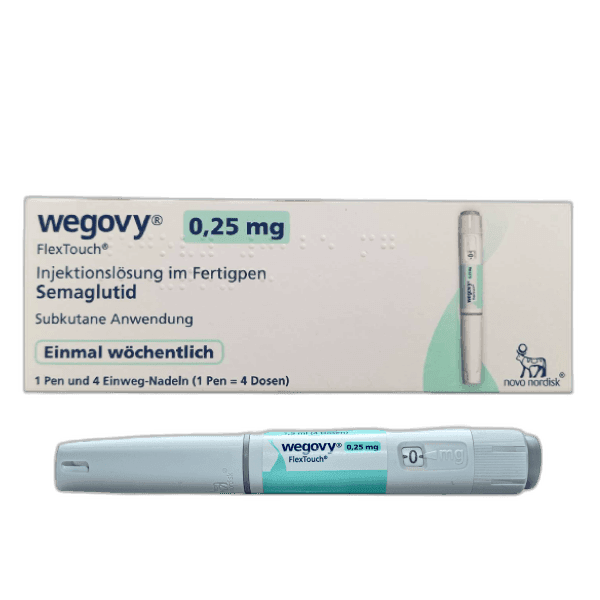
Important to understand: Ozempic is primarily a diabetes medication. For the treatment of overweight without diabetes, the same active ingredient is approved at a higher dose under the name Wegovy. Nevertheless, Ozempic is frequently prescribed "off-label" for weight loss.
The active ingredient semaglutide belongs to the class of GLP-1 receptor agonists. It mimics a natural gut hormone that regulates blood sugar and influences the feeling of fullness. The medication is injected under the skin once a week.
In studies in adults with type 2 diabetes, body weight decreased with Ozempic. After one year, 13% (0.5 mg) and 21 to 24% (1 mg) of those treated had lost at least 10% of their body weight.
Active Ingredients & Mechanism of Action
Active ingredient: Semaglutid
Semaglutide mimics the body's own hormone GLP-1 (glucagon-like peptide-1), which has several functions:
1. Appetite regulation in the brain: GLP-1 receptors in the brain influence the satiety center. Semaglutide activates these receptors and leads to a stronger and longer-lasting feeling of fullness. Many users report that they are less hungry and feel full sooner.
2. Slowed gastric emptying: The stomach contents are passed on to the intestine more slowly. As a result, you feel full longer and automatically eat less.
3. Blood sugar regulation (in people with diabetes): Semaglutide promotes insulin release and inhibits glucagon – but only when blood sugar is elevated. This lowers the risk of hypoglycemia.
The result: Most people eat less without constantly feeling hungry. Weight loss occurs primarily through reduced calorie intake, not through increased calorie expenditure.
Study results: In a 2-year study in adults with type 2 diabetes, body weight decreased on average by 3.6 kg and 4.9 kg with 0.5 mg and 1 mg semaglutide respectively, and by 0.7 kg and 0.5 kg with placebo.
Who is it suitable for?
Approved indication (Ozempic):
- Adults with type 2 diabetes mellitus to improve blood sugar control
- In combination with diet and exercise
- As monotherapy or in combination with other diabetes medications
Off-label use for overweight: Ozempic is frequently used outside its approved indication in people with overweight who do not have diabetes. For this indication, it is actually Wegovy (higher-dose semaglutide) that is approved.
Typical candidates for treatment:
- BMI ≥ 30 (obesity)
- BMI ≥ 27 with weight-related comorbidities
- Unsuccessful attempts with dietary changes and exercise
- Motivation for long-term lifestyle changes
Less suitable in cases of:
- Type 1 diabetes (not approved)
- History of pancreatitis
- End-stage renal disease (limited experience)
- Pregnancy or breastfeeding
- History of eating disorders
Important: Ozempic is not a lifestyle medication for mild overweight. It is intended for people whose weight endangers their health.
Available Dosages
Ozempic dosages (approved for diabetes):
- 0.25 mg weekly – starting dose for 4 weeks
- 0.5 mg weekly – maintenance dose after dose escalation
- 1 mg weekly – further dose increase if needed
- 2 mg weekly – highest available dose
Typical dose escalation schedule:
- Weeks 1-4: 0.25 mg
- From week 5: 0.5 mg
- If needed, from week 9: 1 mg
- If needed, from week 13: 2 mg
For weight loss: Weight reduction is dose-dependent. Higher doses lead to more weight loss, but also to more side effects.
Available pens:
- FlexTouch pen with 0.25 mg
- FlexTouch pen with 0.5 mg
- FlexTouch pen with 1 mg
- FlexTouch pen with 2 mg
The pens contain 4 doses for 4 weeks. For 0.5 mg and 1 mg, pens with 8 doses for 8 weeks are also approved.
Dosage form and pack sizes
The medicines catalogue lists 3 pack variants: 3 strengths in one pack size.
- Dosage form
- Injektionslösung in einem Fertigpen
- Strengths
- 0,25 mg, 0,5 mg, 1,0 mg
- Pack sizes
- 1 Pen
| Strength | Pack | PZN | Duration |
|---|---|---|---|
| 0,25 mg | 1 Pen | 15398528 | 28 days |
| 0,5 mg | 1 Pen | 19810434 | 28 days |
| 1,0 mg | 1 Pen | 19904158 | 28 days |
Packs listed in the German medicines catalogue. Which of them are currently available and what they cost is shown in the price overview.
The Pharmazentralnummer (PZN) is the nationwide unique identifier of a pack in Germany.
Duration is the catalogue value for the usual dosage. How long a pack actually lasts depends on the dose your doctor prescribes.
How to Take
Administration:
- Once weekly, on the same day of the week
- Subcutaneous injection (under the skin)
- Possible injection sites: abdomen, thigh, upper arm
- Independent of meals
Injection technique: 1. Take the pen out of the refrigerator (it can be left to reach room temperature for 30 min.) 2. Attach a new needle 3. Set the dose 4. Pinch a fold of skin and insert the needle 5. Press the injection button and hold it for 6 seconds 6. Remove the needle and dispose of it safely
Changing the day of the week: If necessary, the injection day can be changed as long as there are at least 3 days (more than 72 hours) between injections.
Missed dose:
- Within 5 days: Take it as soon as possible
- After 5 days: Skip the dose and continue with the next regularly scheduled injection
Storage:
- Before first use: In the refrigerator (2-8°C)
- After first use: At room temperature (up to 30°C) or in the refrigerator for max. 6 weeks
Contraindications
Contraindication:
- Hypersensitivity: To semaglutide or any of the other ingredients
Outside the approved indication:
- Type 1 diabetes: Ozempic is only approved for type 2 diabetes
- Diabetic ketoacidosis: Not suitable for its treatment
Relative contraindications – special caution:
- History of pancreatitis: Increased risk of recurrent inflammation of the pancreas
- Renal impairment: No dose adjustment needed for mild to severe renal impairment, only limited experience in end-stage renal disease
- Severe gastrointestinal diseases: Gastroparesis, inflammatory bowel diseases
- Diabetic retinopathy: Close monitoring required
- Pregnancy and breastfeeding: Not recommended; discontinue 2 months before a planned pregnancy
Warnings:
- Risk of hypoglycemia: Increased when combined with insulin or sulfonylureas
- Thyroid: Have thyroid nodules or thyroid enlargement evaluated by a doctor
- Dehydration: In case of severe vomiting or diarrhea, make sure to drink enough fluids
Possible Side Effects
Very common (more than 10%):
- Nausea (especially at the beginning)
- Diarrhea
These gastrointestinal complaints are typical of GLP-1 agonists and usually improve after a few weeks.
Common (1-10%):
- Vomiting
- Abdominal pain
- Constipation
- Headache
- Dizziness
- Fatigue
- Flatulence
- Heartburn
- Loss of appetite
- Gallstones (with rapid weight loss)
Uncommon (0.1-1%):
- Changes in taste
- Increased heart rate
- Injection site reactions
Rare but serious:
- Pancreatitis: Severe, persistent abdominal pain – see a doctor immediately
- Severe allergic reactions
- Acute renal insufficiency (with severe dehydration)
- Worsening of diabetic retinopathy
Tips for nausea:
- Increase the dose slowly
- Smaller meals
- Avoid fatty foods
- Drink enough fluids
Interactions
Important interactions:
Insulin and sulfonylureas:
- Increased risk of hypoglycemia
- Dose reduction of these medications often necessary
- Close blood sugar monitoring
Oral medications:
- Ozempic slows gastric emptying
- The absorption of other medications may be altered
- Particularly relevant for time-critical medications (e.g. antibiotics)
Oral contraceptives:
- A reduced effect of oral contraceptives due to semaglutide is not expected
- In case of gastrointestinal complaints, consider additional contraception
Warfarin and other anticoagulants:
- INR checks recommended at the start and when the dose is changed
Alcohol:
- May increase the risk of hypoglycemia (in people with diabetes)
- May intensify gastrointestinal side effects
General note: Tell your doctor about all medications you are taking. For some active ingredients, adjusting the time of intake may be advisable.
Frequently Asked Questions
Ozempic is primarily approved for type 2 diabetes, not specifically for weight reduction. For the treatment of overweight without diabetes, the same active ingredient is approved at a higher dose as Wegovy. However, Ozempic is often prescribed 'off-label' for this purpose.
In studies in adults with type 2 diabetes, 13% (0.5 mg) and 21 to 24% (1 mg) of participants had lost at least 10% of their body weight after one year. In a 2-year study, the average loss was 3.6 kg (0.5 mg) and 4.9 kg (1 mg). Individual weight loss varies and also depends on diet and exercise.
Studies show that weight often goes back up after stopping. Ozempic is therefore intended as a long-term therapy. At the same time, eating and exercise habits should be changed in order to maintain the weight in the long term.
Yes, nausea is a very common side effect, especially at the beginning of treatment. It usually improves after a few weeks. Increasing the dose slowly, eating smaller meals and avoiding fatty foods can help.
Both contain the same active ingredient, semaglutide. Ozempic (max. 2 mg) is approved for diabetes, Wegovy (maintenance dose 2.4 mg, up to 7.2 mg in certain cases according to the summary of product characteristics) specifically for weight reduction. Wegovy is dosed higher.
Similar Medications
Is Ozempic right for you?
A licensed doctor will review your information and issue a prescription if suitable. Discreet and secure.
Important Notice
This information does not replace medical advice. If you have questions about your health or the suitability of this medication, please consult a doctor or pharmacist.
Important Safety Information
This service operates under German pharmaceutical law (HWG). For risks and side effects, read the package leaflet and consult your doctor or pharmacist. All medications are dispensed from a licensed pharmacy in Germany.