
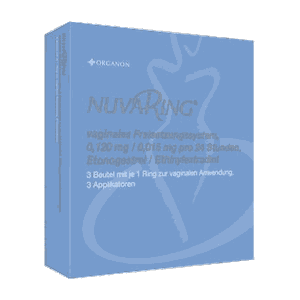
What is NuvaRing?
NuvaRing is a flexible, transparent plastic ring for hormonal contraception. It is inserted into the vagina, where it continuously releases low doses of hormones over 3 weeks – the progestin etonogestrel and the estrogen ethinylestradiol.
Unlike with the pill, the hormones are not absorbed through the gastrointestinal tract but directly through the vaginal wall into the bloodstream. As a result, the effect is not impaired by vomiting or diarrhea.
In clinical studies, the Pearl Index was 0.96 (including user errors) or 0.64 (method failures only) – comparable to the combined pill.
Active Ingredients & Mechanism of Action
Active ingredient: Etonogestrel 11,7 mg, Ethinylestradiol 2,7 mg
NuvaRing prevents pregnancy through the same mechanisms as the combined pill:
Inhibition of ovulation: The hormones suppress ovulation by inhibiting the release of gonadotropins from the pituitary gland.
Cervical mucus: The cervical mucus becomes thicker and forms a barrier to sperm.
Endometrium: The uterine lining builds up less.
Special feature of vaginal use: Because the hormones are absorbed directly through the vaginal wall, the first-pass effect is partly bypassed. The daily hormone release is lower than with most pills, but still effective.
Who is it suitable for?
NuvaRing is suitable for women who:
- Want hormonal contraception
- Do not want to take a pill every day
- Have trouble taking the pill regularly
- Suffer from gastrointestinal problems (vomiting, diarrhea)
Particularly suitable in case of:
- An irregular daily routine
- Frequently forgetting the pill
- Nausea while taking the pill
- A wish for discreet contraception
Not suitable in case of:
- Severe overweight (BMI > 30) – increases the risk of blood clots (thrombosis), especially together with other risk factors
- Uterine prolapse or vaginal prolapse
- Certain vaginal infections
- The same contraindications as combined pills
Available Dosages
Active ingredient content of the ring:
- Etonogestrel: 11.7 mg (daily release: approx. 0.120 mg)
- Ethinylestradiol: 2.7 mg (daily release: approx. 0.015 mg)
Ring dimensions:
- Diameter: approx. 54 mm
- Cross-section: approx. 4 mm
Pack sizes:
- 1 ring (1 month)
- 3 rings (3 months)
Cycle of use: 3 weeks of wear, 1 week break.
How to Take
Inserting the ring: 1. Take the ring out of the packaging 2. Squeeze the ring between your thumb and index finger 3. In a comfortable position (standing with one leg raised, squatting, or lying down), insert it deep into the vagina 4. The exact position is not important – the ring does not need to sit directly at the cervix
Duration of wear: The ring stays in the vagina for 3 weeks (21 days). It is then removed, followed by a 1-week break during which bleeding usually occurs.
Removing: Hook your index finger under the ring and pull it out. Dispose of the used ring in its packaging (do not flush it down the toilet).
Inserting a new ring: After exactly 7 ring-free days, insert the new ring – on the same day of the week and at about the same time of day as when it was removed.
If the ring slips out:
- Less than 3 hours: Rinse with cold/lukewarm water and reinsert
- More than 3 hours in week 1 or 2: Reinsert the ring immediately and additionally use a condom until the ring has been worn again for 7 days without interruption
- More than 3 hours in week 3: Dispose of the ring. Either insert a new ring immediately (this starts the next 3 weeks) or wait for the withdrawal bleed and insert a new ring no later than 7 days after it slipped out. The second option only applies if the ring was worn without interruption during the previous 7 days
Sex with the ring: The ring can stay in the vagina during intercourse. Most couples do not feel it. If desired, it can be removed for a maximum of 3 hours.
Contraindications
NuvaRing must not be used in cases of:
- Thromboembolic disorders (current or past)
- High risk of thrombosis
- Severe cardiovascular diseases
- Migraine with aura
- Severe liver diseases
- Liver tumors
- Hormone-dependent tumors
- Unexplained vaginal bleeding
- Pregnancy
Special caution:
- Smoking over the age of 35
- Severe overweight
- High blood pressure
- Diabetes
- Familial predisposition to thrombosis
Risk of thrombosis: The risk is comparable to that of pills containing etonogestrel or desogestrel and somewhat higher than with levonorgestrel-containing pills.
Possible Side Effects
Common (1-10%):
- Headache
- Migraine
- Decreased libido
- Vaginal inflammation, discharge
- Nausea
- Acne
- Weight gain
- Breast tenderness
- Pain in the pelvic area
- Dysmenorrhea
- Ring-related discomfort (foreign body sensation)
Uncommon (0.1-1%):
- Mood swings
- Flatulence
- Alopecia
- Skin rash
Rare but serious:
- Thromboembolism (venous and arterial)
Local discomfort: Some women report a foreign body sensation, which usually disappears after a few days.
Interactions
Reduced effectiveness due to:
- Antiepileptic drugs (phenytoin, carbamazepine)
- Rifampicin
- Some HIV medications (e.g. ritonavir, efavirenz)
- St. John's wort
No impairment from:
- Vaginal antifungals (treatment of vaginal yeast infections)
- Tampons
- Spermicides
Important: Unlike with the pill, the effect is not impaired by vomiting or diarrhea.
Frequently Asked Questions
Most couples do not feel the ring at all or only barely. If it is bothersome, it can be removed for up to 3 hours without losing contraceptive protection.
The ring cannot 'slip' into the body. It sits in the vagina in front of the cervix. Very rarely, it can slip out when using the toilet or changing a tampon.
Rinse it with cold or lukewarm water and reinsert it. If it was out for less than 3 hours, protection is maintained. If it was out for more than 3 hours, protection may be reduced. In week 1 or 2, additionally use a condom until the ring has been worn again for 7 days without interruption. In week 3, dispose of the ring and either insert a new ring immediately or wait for the withdrawal bleed and insert a new ring no later than 7 days after it slipped out. The second option only applies if the ring was worn without interruption during the previous 7 days.
Yes, the ring sits securely in the vagina. Swimming, bathing, sports, and all other activities are possible without any problems.
The risk of thrombosis is comparable to that of pills of the same progestin class.
Similar Medications
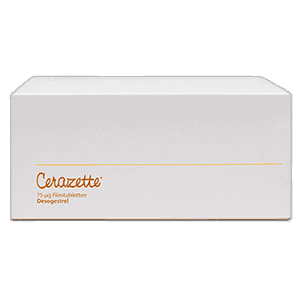
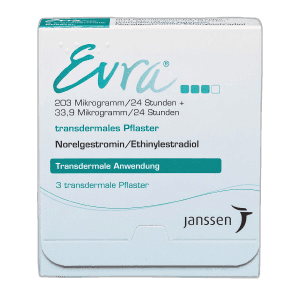
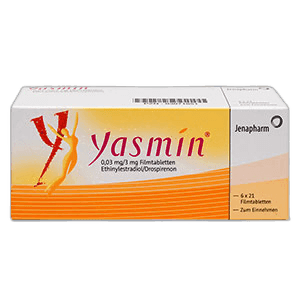
Is NuvaRing right for you?
A licensed doctor will review your information and issue a prescription if suitable. Discreet and secure.
Important Notice
This information does not replace medical advice. If you have questions about your health or the suitability of this medication, please consult a doctor or pharmacist.
Important Safety Information
This service operates under German pharmaceutical law (HWG). For risks and side effects, read the package leaflet and consult your doctor or pharmacist. All medications are dispensed from a licensed pharmacy in Germany.