
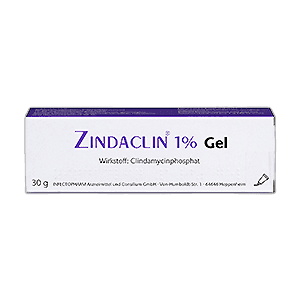
What is Zindaclin?
Zindaclin is a prescription-only gel containing the active ingredient clindamycin, a lincosamide antibiotic. It is used for the topical treatment of mild to moderate inflammatory acne vulgaris.
Clindamycin works against Cutibacterium acnes, the bacteria that cause acne, and reduces the inflammatory response in the skin. Ideally, it should be used in combination with benzoyl peroxide or a retinoid to prevent the development of resistance.
Zindaclin is applied once daily and is approved for adults and adolescents aged 12 years and older.
Active Ingredients & Mechanism of Action
Active ingredient: Clindamycin 1%
Clindamycin has an antibacterial effect:
Mechanism of action:
- Inhibits bacterial protein synthesis (50S subunit of the ribosomes)
- Bacteriostatic against Cutibacterium acnes
- Reduces the concentration of free fatty acids on the skin
- Anti-inflammatory side effect
Additional effects:
- Reduces neutrophil chemotaxis
- Inhibits complement activation
- Acts indirectly against comedones by reducing inflammation
Time course:
- First improvement: 2-4 weeks
- Optimal effect: 6-8 weeks
Who is it suitable for?
Zindaclin is suitable for:
- Mild to moderate inflammatory acne
- Papulopustular acne
- Adults and adolescents aged 12 years and older
Important:
- Best used in combination with benzoyl peroxide (to counter resistance)
- Or in combination with a retinoid
Not suitable for:
- Severe acne (systemic therapy required)
- Non-inflammatory acne (comedones only)
- Monotherapy over a longer period (risk of resistance)
Available Dosages
Zindaclin Gel 1%:
- Apply a thin layer to the affected areas of skin once daily
- Duration of treatment: 6-8 weeks, maximum 12 weeks
Combination recommended:
- Zindaclin in the morning + benzoyl peroxide or a retinoid in the evening
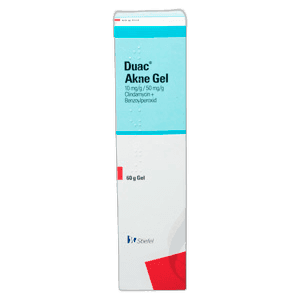
- Or a combination product such as Duac Gel
Dosage form and pack sizes
The medicines catalogue lists one pack variant: one strength in one pack size.
- Dosage form
- Gel
- Strengths
- 1%
- Pack sizes
- 30 g
| Strength | Pack | PZN | Duration |
|---|---|---|---|
| 1% | 30 g | 03929883 | 0 days |
Packs listed in the German medicines catalogue. Which of them are currently available and what they cost is shown in the price overview.
The Pharmazentralnummer (PZN) is the nationwide unique identifier of a pack in Germany.
Duration is the catalogue value for the usual dosage. How long a pack actually lasts depends on the dose your doctor prescribes.
How to Take
Application: 1. Cleanse and dry the face 2. Apply a thin layer to the inflamed areas 3. Allow to absorb 4. Wash hands
Combination therapy:
- Morning: Zindaclin
- Evening: benzoyl peroxide or a retinoid
- Apply at different times, not simultaneously
Important:
- Do not apply to open wounds or damaged skin
- Avoid contact with the eyes and mucous membranes
Contraindications
Do not use in case of:
- Hypersensitivity to clindamycin or lincomycin
- History of ulcerative colitis or Crohn's disease
- History of antibiotic-associated colitis
Use with caution in case of:
- Sensitive skin
- Atopic dermatitis
Pregnancy: Can be used after a strict assessment of the medical need.
Breastfeeding: Use is possible, but not in the breast area.
Possible Side Effects
Common (1-10%):
- Dry skin
- Skin irritation
- Burning or itching
Uncommon:
- Scaling
- Oily skin
- Contact dermatitis
Rare:
- Gastrointestinal complaints (with systemic absorption)
- Pseudomembranous colitis (no cases in clinical studies with Zindaclin, reported in rare cases with other topical clindamycin products). If diarrhea occurs, stop using Zindaclin immediately.
Interactions
Interactions:
- Erythromycin (topical) – antagonistic effect, do not combine
- Neuromuscular blockers – theoretically enhanced effect
Useful combination:
- Benzoyl peroxide (prevents resistance)
- Retinoids (complementary effect)
Frequently Asked Questions
Clindamycin alone can lead to the development of resistance in the bacteria. Benzoyl peroxide works through a different mechanism (oxidation) and prevents this resistance.
Duac Gel contains clindamycin AND benzoyl peroxide in one product. Zindaclin contains only clindamycin. If you use Zindaclin, you should also apply benzoyl peroxide separately.
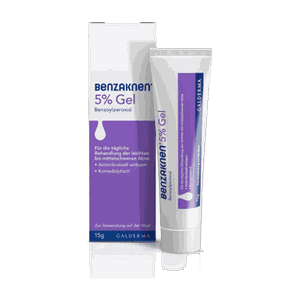
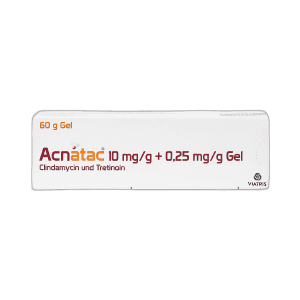
Similar Medications
Is Zindaclin right for you?
A licensed doctor will review your information and issue a prescription if suitable. Discreet and secure.
Important Notice
This information does not replace medical advice. If you have questions about your health or the suitability of this medication, please consult a doctor or pharmacist.
Important Safety Information
This service operates under German pharmaceutical law (HWG). For risks and side effects, read the package leaflet and consult your doctor or pharmacist. All medications are dispensed from a licensed pharmacy in Germany.