
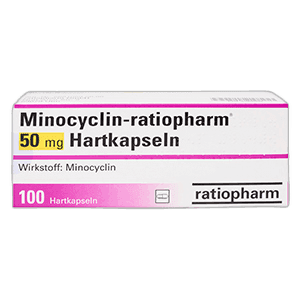
What is Minocycline?
Minocycline is a tetracycline antibiotic used in tablet form to treat moderate to severe inflammatory acne.
The medication not only has an antibacterial effect against Cutibacterium acnes but also has anti-inflammatory properties. Milk and dairy products impair the absorption of minocycline, so there should be an interval of 2-3 hours between taking it and dairy products.
The duration of treatment is typically 3-6 months, together with a topical retinoid.
Active Ingredients & Mechanism of Action
Active ingredient: Minocyclin
Minocycline works through several mechanisms:
Antibacterial:
- Inhibits bacterial protein synthesis
- Binds to the 30S subunit of the ribosomes
- Has a bacteriostatic effect against Cutibacterium acnes
Anti-inflammatory:
- Inhibits matrix metalloproteinases
- Reduces pro-inflammatory cytokines
- Decreases neutrophil chemotaxis
- Independent of the antibacterial effect
Pharmacokinetic advantages:
- Highest lipophilicity among the tetracyclines
- Good penetration into the sebaceous glands
Who is it suitable for?
Minocycline is suitable for:
- Moderate to severe inflammatory acne
- Papules and pustules
- When topical therapy alone is not sufficient
- As an add-on to topical retinoids
Not suitable for:
- Mild, purely comedonal acne
- Pregnancy
- Breastfeeding
- Children under 8 years of age
- Lupus erythematosus
- Severe hepatic/renal insufficiency
Available Dosages
Standard dosage:
- 50-100 mg 1-2x daily
- Usual: 100 mg 1x daily
Extended-release forms:
- 1x daily possible
Duration of treatment:
- Typical: 3-6 months
- Limited to a maximum of 6 months at a time (risk of resistance)
- Always together with a topical retinoid
How to Take
How to take:
- With or without food (unlike other tetracyclines)
- With a large glass of water
- Not immediately before lying down (to protect against esophagitis)
Important:
- Complete the full course of treatment
- Do not take together with antacids or iron supplements
- Use sun protection (photosensitivity)
- Do not take together with isotretinoin (pseudotumor cerebri)
Watch for side effects: See a doctor if you experience dizziness, pigmentation or lupus-like symptoms.
Contraindications
Do not use in cases of:
- Pregnancy
- Breastfeeding
- Children under 8 years of age
- Hypersensitivity to tetracyclines
- Severe liver dysfunction
- Systemic lupus erythematosus
Use with caution in cases of:
- Renal insufficiency
- Liver disease
- Myasthenia gravis
- Vestibular disorders (dizziness)
Important: Do not take together with isotretinoin – increased risk of pseudotumor cerebri!
Possible Side Effects
Common:
- Nausea, diarrhea
- Dizziness, lightheadedness (vestibular)
- Photosensitivity
- Vaginal candidiasis
Specific to minocycline:
- Blue-gray pigmentation of the skin, teeth, nails
- Vestibular disorders (dizziness, balance problems)
- Lupus-like syndrome (rare)
- Autoimmune hepatitis (rare)
Rare but serious side effects:
- Pseudotumor cerebri (severe headache, visual disturbances)
- Drug-associated lupus erythematosus
- Hyperpigmentation (often permanent)
Tooth discoloration: Irreversible in children under 8 years of age – therefore contraindicated.
Interactions
Absorption reduced by:
- Antacids (aluminum, magnesium)
- Iron supplements
- Calcium supplements
- Keep an interval of 2-3 hours
Do not combine with:
- Isotretinoin – pseudotumor cerebri
- Warfarin – increased tendency to bleed
- Oral retinoids
Milk and dairy products: The calcium they contain impairs absorption. Take minocycline 2-3 hours before or after dairy products.
Frequently Asked Questions
Minocycline is more lipophilic and penetrates better into the sebaceous glands. However, it causes dizziness and pigmentation more often than doxycycline.
A maximum of 6 months at a time, followed by a break or a switch to a different medication. Longer use increases the risk of resistance and the risk of side effects such as pigmentation.
Minocycline can affect the organ of balance (vestibular apparatus). This dizziness occurs particularly in women and at the start of therapy. It often improves or goes away. In case of severe dizziness, switch to doxycycline.
The hyperpigmentation caused by minocycline can be partly permanent, especially in sun-exposed areas. If early signs appear (bluish discoloration), treatment should be changed.
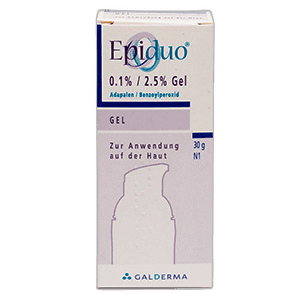
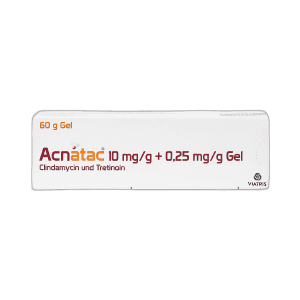
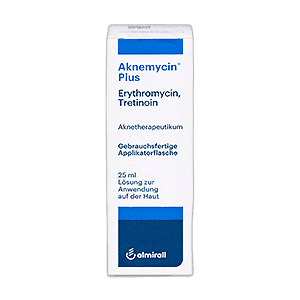
Similar Medications
Is Minocycline right for you?
A licensed doctor will review your information and issue a prescription if suitable. Discreet and secure.
Important Notice
This information does not replace medical advice. If you have questions about your health or the suitability of this medication, please consult a doctor or pharmacist.
Important Safety Information
This service operates under German pharmaceutical law (HWG). For risks and side effects, read the package leaflet and consult your doctor or pharmacist. All medications are dispensed from a licensed pharmacy in Germany.