
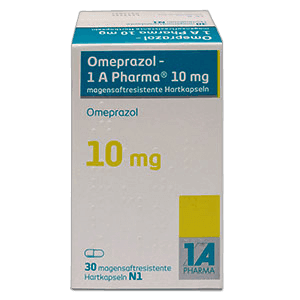
What is Omeprazole?
Omeprazole is a proton pump inhibitor (PPI). It inhibits stomach acid production and is used for heartburn, gastroesophageal reflux disease (GERD), gastric and duodenal ulcers, and as stomach protection when taking certain medications.
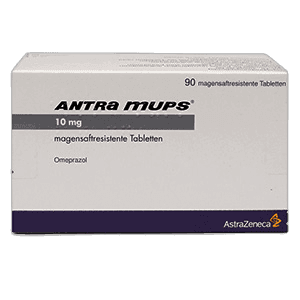
Omeprazole is available under the brand name Antra MUPS® as well as numerous generics. Without a prescription, omeprazole 20 mg is only available for adults to treat reflux symptoms (e.g. heartburn, acid regurgitation), once daily for 14 days. Other strengths and indications as well as long-term use are prescription-only.
The effect does not set in immediately – full acid suppression is reached after 2-5 days.
Active Ingredients & Mechanism of Action
Active ingredient: Omeprazol
Omeprazole irreversibly inhibits the proton pump (H+/K+-ATPase) in the parietal cells of the stomach:
Mechanism of action:
- Omeprazole is a prodrug – it is only activated in the acidic environment of the parietal cell
- Binds irreversibly to the proton pump
- Blocks the final step of stomach acid production
- Reduces stomach acid by up to 90%
Onset of action:
- First improvement within 1-2 hours
- Full effect after 2-5 days of regular use
- New proton pumps first have to be formed again
Duration of action: After stopping, acid production returns to normal within 3-5 days, as new proton pumps are regenerated.
Who is it suitable for?
Omeprazole is suitable for:
- Gastroesophageal reflux disease (GERD)
- Heartburn and acid regurgitation
- Reflux esophagitis (inflammation of the esophagus)
- Gastric and duodenal ulcers
- Eradication therapy for Helicobacter pylori (in combination with antibiotics)
- Stomach protection during NSAID use (ibuprofen, diclofenac)
- Zollinger-Ellison syndrome
Not suitable as a permanent solution for:
- Occasional heartburn (antacids may be sufficient)
- Unexplained upper abdominal complaints without a diagnostic workup
Available Dosages
Available strengths:
- 10 mg (prescription-only)
- 20 mg (non-prescription only for adults with reflux symptoms for 14 days, otherwise prescription-only)
- 40 mg (prescription-only)
Usual dosages:
- Heartburn/mild reflux: 20 mg 1x daily
- Reflux esophagitis: 20-40 mg 1x daily for 4-8 weeks
- Gastric ulcer: 20 mg 1x daily for 4-8 weeks
- Stomach protection with NSAIDs: 20 mg 1x daily
- Helicobacter eradication: 20 mg 2x daily (7-14 days, with antibiotics)
Dosage form and pack sizes
The medicines catalogue lists 2 pack variants: 2 strengths in 2 pack sizes. Pack sizes range from 14 to 30 units.
- Dosage form
- Magensaftresistente Hartkapsel
- Strengths
- 20 mg, 40 mg
- Pack sizes
- 14 units, 30 units
| Strength | Pack | PZN | Duration |
|---|---|---|---|
| 20 mg | 14 units | 06113366 | 14 days |
| 40 mg | 30 units | 03881811 | 30 days |
Packs listed in the German medicines catalogue. Which of them are currently available and what they cost is shown in the price overview.
The Pharmazentralnummer (PZN) is the nationwide unique identifier of a pack in Germany.
Duration is the catalogue value for the usual dosage. How long a pack actually lasts depends on the dose your doctor prescribes.
How to Take
How to take:
- In the morning, 30 minutes before breakfast
- Swallow the capsule/tablet whole with water, without chewing
- MUPS tablets can be dissolved in water
Important notes:
- Take regularly, not only when symptoms occur
- Do not stop abruptly after long-term therapy (rebound effect possible)
- Long-term use (>8 weeks) only under medical supervision
- Regular review of whether the therapy is still necessary
Contraindications
Omeprazole must not be taken in cases of:
- Hypersensitivity to omeprazole or other PPIs
- Concomitant use of nelfinavir (HIV medication)
Caution with:
- Hepatic impairment (dose adjustment, max. 20 mg)
- Long-term use (be aware of the risks)
- Suspected stomach cancer (symptoms may be masked!)
Pregnancy/breastfeeding: Omeprazole can be used during pregnancy if the benefit outweighs the risk. It passes into breast milk in small amounts.
Possible Side Effects
Common (1-10%):
- Headache
- Abdominal pain
- Diarrhea
- Constipation
- Nausea
- Flatulence
Uncommon:
- Dizziness
- Sleep disturbances
- Skin rash
With long-term use (>1 year):
- Increased risk of bone fractures (hip, wrist)
- Magnesium deficiency
- Vitamin B12 deficiency
- Possibly increased risk of Clostridium difficile infections
- Possibly increased risk of kidney disease
Rebound effect: After stopping, more stomach acid may temporarily be produced. Tapering off is recommended.
Interactions
Contraindicated:
- Nelfinavir (HIV) – loss of efficacy
Reduced effect of:
- Clopidogrel (Plavix®) – omeprazole inhibits CYP2C19 and can impair the activation of clopidogrel. Alternative: pantoprazole
Altered absorption due to pH change:
- Ketoconazole, itraconazole – reduced absorption
- Iron preparations – reduced absorption
- Vitamin B12 – reduced absorption with long-term use
Omeprazole inhibits CYP2C19:
- Diazepam – slowed breakdown
- Phenytoin – increased levels possible
Frequently Asked Questions
Omeprazole is only activated in the parietal cells of the stomach, which are active when food is eaten. Taking it 30 minutes before breakfast ensures that the active ingredient is ready when the proton pumps are activated after the meal.
Long-term use is possible but should be reviewed regularly by a doctor. With prolonged use, the risk of side effects such as magnesium deficiency and bone fractures increases. Check with your doctor whether the lowest effective dose is being used.
After stopping omeprazole, the stomach may temporarily produce more acid than before. This can intensify heartburn symptoms. Therefore, stop omeprazole slowly (reduce the dose gradually over 2-4 weeks).
Both are proton pump inhibitors with similar efficacy. The most important difference: omeprazole inhibits the enzyme CYP2C19 more strongly, which leads to more interactions (e.g., with clopidogrel). Pantoprazole has fewer interactions and is therefore often preferred.
Similar Medications

Is Omeprazole right for you?
A licensed doctor will review your information and issue a prescription if suitable. Discreet and secure.
Important Notice
This information does not replace medical advice. If you have questions about your health or the suitability of this medication, please consult a doctor or pharmacist.
Important Safety Information
This service operates under German pharmaceutical law (HWG). For risks and side effects, read the package leaflet and consult your doctor or pharmacist. All medications are dispensed from a licensed pharmacy in Germany.