
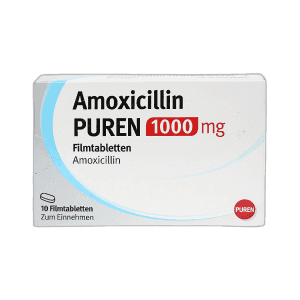
What is Amoxicillin?
Amoxicillin is an antibiotic belonging to the aminopenicillin group. For urinary tract infections, it is often used in combination with clavulanic acid (AmoxiClav, Augmentan®), because many pathogens have become resistant to amoxicillin alone.
Clavulanic acid is a beta-lactamase inhibitor that restores the effectiveness of amoxicillin by blocking bacterial resistance enzymes. The amoxicillin/clavulanic acid combination is used for complicated urinary tract infections, kidney infections, and other infections.
Active Ingredients & Mechanism of Action
Active ingredient: Amoxicillin (ggf. + Clavulansäure)
Mechanism of action of amoxicillin:
- Inhibits bacterial cell wall synthesis
- Binds to penicillin-binding proteins (PBPs)
- The bacteria can no longer multiply and die off
- Bactericidal effect (kills bacteria)
Clavulanic acid (in AmoxiClav):
- Inhibits beta-lactamases that would inactivate amoxicillin
- Considerably broadens the spectrum of activity
- Makes resistant bacteria susceptible again
Spectrum of activity of AmoxiClav:
- E. coli (the most common pathogen in bladder infections)
- Klebsiella, Proteus, Enterobacter
- Staphylococci, streptococci
- Anaerobes
Who is it suitable for?
AmoxiClav is suitable for:
- Complicated urinary tract infections
- Kidney infection (pyelonephritis)
- Recurrent bladder infections
- Cases in which first-line therapies have failed
Amoxicillin alone:
- Only if the pathogen has been shown to be susceptible
- An option during pregnancy (based on an antibiogram)
Not suitable:
- Penicillin allergy
- Infectious mononucleosis (mono) → high risk of rash
Available Dosages
AmoxiClav for urinary tract infections:
- 625 mg (500/125 mg) three times daily for 5–7 days
- 1000 mg (875/125 mg) twice daily for 5–7 days
Amoxicillin alone (only for susceptible pathogens):
- 500 mg three times daily
Available strengths (AmoxiClav):
- 625 mg (500/125 mg)
- 1000 mg (875/125 mg)
- Oral suspension for children
In renal insufficiency:
- Dose adjustment if GFR < 30 ml/min
How to Take
How to take:
- Take at the start of a meal (reduces gastrointestinal discomfort)
- Swallow the tablets with sufficient water
- Keep the time intervals between doses even
Important notes:
- Take the full course of antibiotics
- Do not stop early, even if symptoms improve
- Drink plenty of fluids
- In case of severe diarrhea (bloody or watery): contact a doctor immediately (risk of C. difficile)
- Probiotics can reduce the risk of diarrhea
Pregnancy: Amoxicillin is an option during pregnancy (when indicated).
Contraindications
Amoxicillin/AmoxiClav must not be taken in cases of:
- Allergy to penicillins
- History of a severe immediate allergic reaction (e.g., anaphylaxis) to another beta-lactam antibiotic (e.g., a cephalosporin, carbapenem or monobactam)
- History of severe liver dysfunction during AmoxiClav treatment
- Infectious mononucleosis (high risk of a measles-like rash)
Caution in cases of:
- Mild kidney or liver insufficiency
- Allergic diathesis (tendency toward allergies)
- Anticoagulant therapy
AmoxiClav-specific: Clavulanic acid can cause cholestatic jaundice. In patients with known AmoxiClav-induced hepatitis, renewed administration is contraindicated.
Possible Side Effects
Very common (≥ 10%):
- Diarrhea (with AmoxiClav)
Common (1–10%):
- Diarrhea (with amoxicillin alone)
- Nausea, vomiting
- Skin rash (uncommon with AmoxiClav)
- Candidiasis (vaginal/oral)
Uncommon (0.1–1%):
- Abdominal pain
- Headache
- Elevated liver enzymes (especially with AmoxiClav)
- Itching
Rare but serious:
- C. difficile-associated diarrhea
- Allergic reactions (anaphylaxis)
- Hepatitis (especially with AmoxiClav → cholestatic)
- Stevens-Johnson syndrome
Note: Gastrointestinal complaints are more common with AmoxiClav than with amoxicillin alone, due to the clavulanic acid.
Interactions
Interactions with other medicines:
- Oral anticoagulants (e.g., warfarin, acenocoumarol): Increased INR values have been described in patients receiving amoxicillin. If they are used together, prothrombin time or INR should be carefully monitored at the start and at the end of treatment. The dose of the anticoagulant may need to be adjusted.
- Methotrexate: Penicillins can reduce the excretion of methotrexate and thereby increase its toxicity.
- Probenecid: Concomitant use is not recommended, as probenecid can lead to increased and prolonged blood levels of amoxicillin.
- Allopurinol: Concomitant use can increase the likelihood of allergic skin reactions.
- Tetracyclines and other bacteriostatic medicines: They can interfere with the bacteria-killing effect of amoxicillin.
- Mycophenolate mofetil (with AmoxiClav): After the start of AmoxiClav, a decrease of about 50% in the trough levels of the active metabolite mycophenolic acid has been reported. Close medical monitoring should take place during the combination and for a short time afterwards.
Frequently Asked Questions
Many bacteria, especially E. coli, produce beta-lactamases that make amoxicillin ineffective. Clavulanic acid blocks these enzymes and restores its effectiveness. Without clavulanic acid, amoxicillin would no longer be effective against many urinary tract pathogens.
Amoxicillin can be used during pregnancy for urinary tract infections. Your doctor will choose the most suitable active ingredient based on an antibiogram.
Clavulanic acid can affect the intestinal flora more strongly than amoxicillin alone. Take the medication with meals. Probiotics (e.g., Saccharomyces boulardii) can help reduce the diarrhea.
Similar Medications




Is Amoxicillin right for you?
A licensed doctor will review your information and issue a prescription if suitable. Discreet and secure.
Important Notice
This information does not replace medical advice. If you have questions about your health or the suitability of this medication, please consult a doctor or pharmacist.
Important Safety Information
This service operates under German pharmaceutical law (HWG). For risks and side effects, read the package leaflet and consult your doctor or pharmacist. All medications are dispensed from a licensed pharmacy in Germany.