
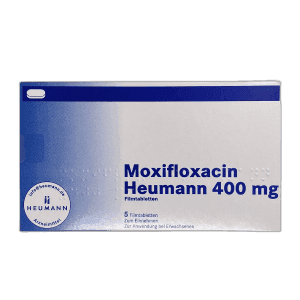
What is Moxifloxacin?
Moxifloxacin (Avalox®) is a 4th-generation fluoroquinolone antibiotic with a broad spectrum of activity that is also effective against anaerobes. It is used as a reserve antibiotic for severe infections, including complicated pelvic infections (PID – Pelvic Inflammatory Disease) and severe mixed gynecological infections.
Important note: Like all fluoroquinolones, moxifloxacin should only be used for severe infections when no suitable alternatives are available (EMA restriction 2019).
Active Ingredients & Mechanism of Action
Active ingredient: Moxifloxacin
Mechanism of action:
- Inhibits bacterial DNA gyrase and topoisomerase IV
- Bactericidal effect
- Broad spectrum including anaerobes
Special feature:
- The only fluoroquinolone with good activity against anaerobes
- Works against the typical pathogens of mixed gynecological infections
- Good tissue penetration into gynecological tissue
- Once-daily dosing
Spectrum of activity: Gram-positive and gram-negative pathogens, anaerobes, atypical pathogens (Chlamydia, Mycoplasma).
Who is it suitable for?
As a reserve drug, moxifloxacin is suitable for:
- Complicated pelvic infections (PID)
- Severe mixed gynecological infections
- When standard therapies have failed or are not tolerated
NOT suitable:
- Uncomplicated bacterial vaginosis (standard therapy: metronidazole or clindamycin)
- Uncomplicated infections
- Children and adolescents
- Pregnancy and breastfeeding
- Hepatic insufficiency (hepatotoxicity!)
Available Dosages
Gynecological infections:
- 400 mg once daily for 14 days
Available strengths:
- 400 mg film-coated tablets
No dose adjustment needed in:
- Mildly to severely impaired renal function, including dialysis
- Elderly patients
Dosage form and pack sizes
The medicines catalogue lists one pack variant: one strength in one pack size.
- Dosage form
- Filmtablette
- Strengths
- 400 mg
- Pack sizes
- 7 units
| Strength | Pack | PZN | Duration |
|---|---|---|---|
| 400 mg | 7 units | 08502787 | 0 days |
Packs listed in the German medicines catalogue. Which of them are currently available and what they cost is shown in the price overview.
The Pharmazentralnummer (PZN) is the nationwide unique identifier of a pack in Germany.
Duration is the catalogue value for the usual dosage. How long a pack actually lasts depends on the dose your doctor prescribes.
How to Take
How to take:
- Once daily, with or without meals
- Swallow the tablet whole with water
- Keep at least 4 hours apart from antacids, iron, magnesium
Important notes:
- Avoid sun/UV exposure (phototoxicity)
- Stop taking immediately if tendon pain occurs
- Watch for heart rhythm disorders (QT prolongation)
- Monitor liver enzymes
Contraindications
Moxifloxacin must not be taken in cases of:
- Hypersensitivity to fluoroquinolones
- Tendon disorder during previous fluoroquinolone therapy
- QT prolongation or medications that prolong QT
- Hepatic insufficiency (Child-Pugh C)
- Pregnancy and breastfeeding
- Children and adolescents
Caution in:
- Epilepsy
- Myasthenia gravis
- Diabetes
- Electrolyte disorders (hypokalemia, hypomagnesemia)
- Risk of aortic aneurysm
Possible Side Effects
Common (1–10%):
- Nausea, diarrhea
- Dizziness, headache
- QT prolongation on the ECG
- Elevated liver enzymes
Rare but serious:
- Hepatitis, liver failure
- Tendon rupture
- Peripheral neuropathy
- Psychiatric disorders
- Severe arrhythmias
Note: Compared with other fluoroquinolones, moxifloxacin has a higher risk of QT prolongation and liver toxicity.
Frequently Asked Questions
Bacterial vaginosis is treated effectively with metronidazole or clindamycin. As a fluoroquinolone, moxifloxacin has more serious potential side effects and is only used for complicated infections or treatment failure.
Fluoroquinolones have a specific side effect profile (tendons, nerves, heart, liver). With short-term use, serious side effects are rare but possible. It is therefore only recommended as a reserve drug.
Taking them at the same time is usually not necessary. In rare cases of severe mixed infections, your doctor may prescribe a combination therapy. The QT prolongation caused by both medications should be taken into account.
Similar Medications
Is Moxifloxacin right for you?
A licensed doctor will review your information and issue a prescription if suitable. Discreet and secure.
Important Notice
This information does not replace medical advice. If you have questions about your health or the suitability of this medication, please consult a doctor or pharmacist.
Important Safety Information
This service operates under German pharmaceutical law (HWG). For risks and side effects, read the package leaflet and consult your doctor or pharmacist. All medications are dispensed from a licensed pharmacy in Germany.