
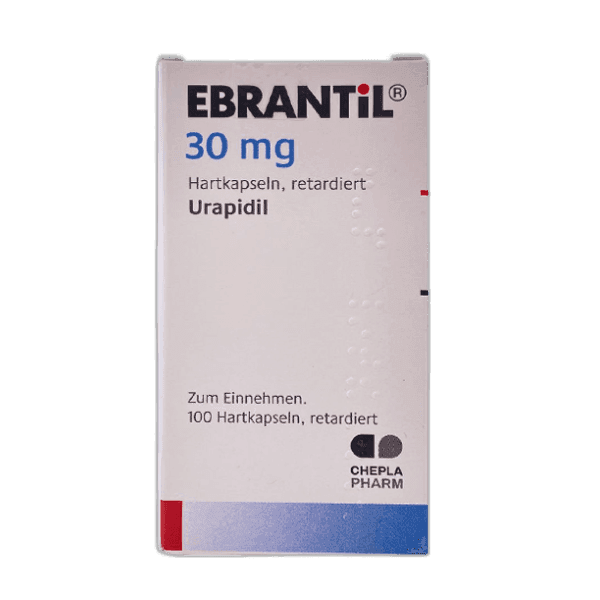
What is Ebrantil (Urapidil)?
Ebrantil® (active ingredient urapidil) is an antihypertensive with a unique dual mechanism of action: it blocks peripheral alpha-1 receptors and at the same time stimulates central serotonin 5-HT1A receptors. This combination lowers blood pressure without the reflex increase in heart rate that often occurs with other vasodilators.
Urapidil is used for severe high blood pressure that does not respond adequately to other medications. As a solution for injection, it is one of the standard medications for hypertensive emergencies in the emergency department. For oral use, it is available as Ebrantil® extended-release capsules.
Unlike most blood pressure medications, urapidil has no negative effect on metabolism (blood sugar, blood lipids) and may even improve insulin sensitivity.
Active Ingredients & Mechanism of Action
Active ingredient: Urapidil
Urapidil has a dual mechanism of action:
1. Peripheral alpha-1 blockade:
- Blocks alpha-1 receptors on the blood vessels
- Arteries and veins dilate
- Peripheral vascular resistance decreases
- Blood pressure falls
2. Central serotonin effect (5-HT1A agonism):
- Stimulates central 5-HT1A receptors in the brainstem
- Inhibits sympathetic tone centrally
- Prevents the reflex increase in heart rate
- Steady lowering of blood pressure without a racing heart
Advantages of the dual mechanism:
- No reflex tachycardia (unlike pure alpha blockers)
- No sodium retention
- Metabolically neutral (no negative effect on blood sugar/blood lipids)
- May improve insulin sensitivity
Onset of action: Extended-release capsules: after 30-60 minutes. Intravenous: within 5 minutes. Duration of action of the extended-release form: 10-14 hours.
Who is it suitable for?
Ebrantil® (urapidil) is suitable for:
- Moderate to severe high blood pressure
- Treatment-resistant high blood pressure (as an add-on medication)
- Hypertensive crises and emergencies (IV)
- Perioperative blood pressure control (IV)
Particularly suitable for:
- High blood pressure with metabolic syndrome
- Diabetes with high blood pressure (metabolically neutral)
- Patients in whom reflex tachycardia is undesirable
- Acute hypertensive episode as emergency therapy
Not suitable:
- Coarctation of the aorta
- Arteriovenous shunts (except hemodynamically insignificant ones)
- Pregnancy and breastfeeding
Available Dosages
High blood pressure (oral, extended-release capsules):
- Starting dose: 30 mg twice daily
- Usual dose: 30-60 mg twice daily
- Maximum dose: 180 mg daily (divided into 2 doses)
Hypertensive emergency (intravenous):
- 25 mg slowly IV (over 20 seconds)
- If the effect is insufficient: repeat after 5 minutes
- Maintenance infusion: 9-30 mg/hour
Available strengths:
- 30 mg, 60 mg, 90 mg extended-release capsules (Ebrantil®)
- 25 mg/5 ml, 50 mg/10 ml solution for injection
Dosage form and pack sizes
The medicines catalogue lists 2 pack variants: 2 strengths in one pack size.
- Dosage form
- Retardkapsel
- Strengths
- 30 mg, 60 mg
- Pack sizes
- 50 units
| Strength | Pack | PZN | Duration |
|---|---|---|---|
| 30 mg | 50 units | 03209404 | 25 days |
| 60 mg | 50 units | 03207948 | 25 days |
Packs listed in the German medicines catalogue. Which of them are currently available and what they cost is shown in the price overview.
The Pharmazentralnummer (PZN) is the nationwide unique identifier of a pack in Germany.
Duration is the catalogue value for the usual dosage. How long a pack actually lasts depends on the dose your doctor prescribes.
How to Take
How to take (extended-release capsules):
- Twice daily (morning and evening)
- Swallow the capsules whole with water
- Do not open or chew
- Regardless of meals
Notes:
- Regular blood pressure and pulse checks
- Move slowly when getting up (orthostatic hypotension possible)
- Watch for dizziness, especially in the first few days
- Do not stop abruptly (taper off slowly)
For emergency use (IV): Only by medical professionals, with blood pressure and ECG monitoring.
Contraindications
Ebrantil® must not be taken in cases of:
- Hypersensitivity to urapidil
- Pregnancy, unless treatment is necessary because of your medical condition
Caution in:
- Hepatic impairment (slowed breakdown)
- Renal impairment (dose adjustment may be needed)
- Older patients (increased sensitivity)
- Heart failure (close monitoring), especially if it has a mechanical cause, e.g. aortic or mitral valve stenosis
- Hypovolemia (greater drop in blood pressure)
Pregnancy and breastfeeding: There is no or only very limited experience with urapidil in pregnant women. Urapidil crosses the placenta to the unborn child, and animal studies have shown harmful effects on reproduction. Use is not recommended in women of childbearing age who are not using contraception. Ebrantil® should not be used during breastfeeding.
Possible Side Effects
Common (1-10%):
- Dizziness
- Headache
- Nausea
- Fatigue
Uncommon (0.1-1%):
- Orthostatic hypotension (especially at the start)
- Gastrointestinal complaints
- Dry mouth
- Nasal congestion
- Sleep disturbances
- Skin rash
- Palpitations
Rare:
- Priapism (persistent erection – emergency!)
- Thrombocytopenia
- Angioedema
- Severe drop in blood pressure
Interactions
Caution with:
- Other blood pressure-lowering drugs → increased hypotension
- Alpha blockers (doxazosin, tamsulosin) → additive hypotension
- PDE-5 inhibitors (sildenafil, tadalafil) → increased lowering of blood pressure
- Alcohol → increased hypotension
- Cimetidine → increased urapidil levels
Note: Combination with ACE inhibitors is currently not recommended, as there is not yet sufficient experience with it.
Frequently Asked Questions
Ebrantil® is used mainly for severe or treatment-resistant high blood pressure when standard medications (ACE inhibitors, sartans, beta blockers, calcium channel blockers) are not sufficient. As an injection, it is a standard medication for hypertensive emergencies in the emergency department.
Unlike pure vasodilators, urapidil stimulates central 5-HT1A receptors in the brainstem. This dampens the sympathetic nervous system and prevents the reflex increase in heart rate that normally occurs when blood pressure drops. The result is a steady lowering of blood pressure without a racing heart.
Ebrantil® is often regarded as a reserve medication for treatment-resistant high blood pressure, as it is not one of the first-line medications. However, it has advantages in certain patients, e.g., those with metabolic syndrome, and is often used as first-line therapy in emergencies.
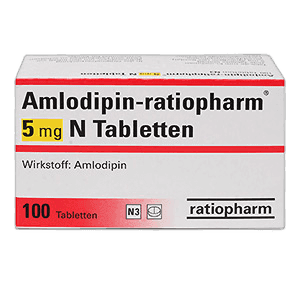
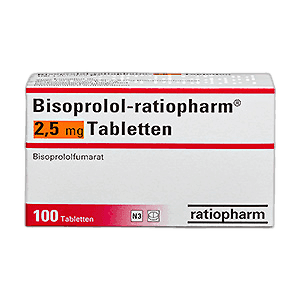
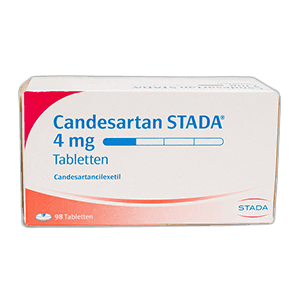
Similar Medications
Is Ebrantil (Urapidil) right for you?
A licensed doctor will review your information and issue a prescription if suitable. Discreet and secure.
Important Notice
This information does not replace medical advice. If you have questions about your health or the suitability of this medication, please consult a doctor or pharmacist.
Important Safety Information
This service operates under German pharmaceutical law (HWG). For risks and side effects, read the package leaflet and consult your doctor or pharmacist. All medications are dispensed from a licensed pharmacy in Germany.