
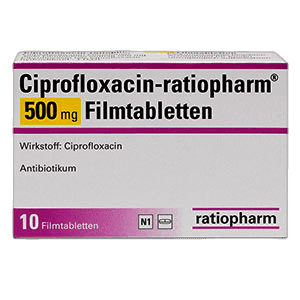
What is ciprofloxacin?
Ciprofloxacin is a broadband fluoroquinolone antibiotic used in severe bacterial infections. In the case of travel, it is passed as a stand-by medication for severe cases, in particular in the case of feverish or bloody diarrhea.
**Like all fluoroquinolones, Ciprofloxacin has been subject to application restrictions by EMA since 2019 due to the risk of severe side effects on tendons, nerves and psyches. It should only be used in severe infections if no safer alternatives are available.
Ciprofloxacin is also permitted in urinary path infections, respiratory tract infections and intraabdominal infections.
Active Ingredients & Mechanism of Action
Active ingredient: Ciprofloxacin
Active mechanism:
- inhibits bacterial DNA gyrase (Topoisomerase II) and topoisomerase IV
- Prevents bacterial DNA replication and repair
- Bactericidal action
Activity spectrum:
- Wide spectrum against Gram-negative pathogens (Salmonella, Shigella, Campylobacter, E. coli)
- Good activity against many migrant pathogens
- High tissue penetration
Pharmacokinetics:
- Good organic bioavailability (approx. 70%)
- Rare effect
- Two daily intake
Who is it suitable for?
Ciprofloxacin in case of travel is suitable for:
- Heavy, feverish travel accident
- Bloody diarrhea (dysentery)
- Emergency self-treatment during travel in remote areas
- Adults aged 18 years
Not suitable:
- Uncomplicated, mild travel loss (riches ORS + Loperamide)
- Children and youth (cartilage damage)
- Pregnancy and breastfeeding
- Known tendon problems under fluoroquinolones
- Epilepsy
Available Dosages
Travel breakdown (stand-by therapy): 500 mg twice a day for 1–3 days
- With improvement after 24 hours, therapy can be terminated
Other indications: 250–750 mg twice a day depending on infection
Available starches:
- 250 mg, 500 mg, 750 mg film tablets
Dosis adjustment:
- In case of kidney failure, dose reduction according to GFR
Dosage form and pack sizes
The medicines catalogue lists 2 pack variants: 2 strengths in one pack size.
- Dosage form
- Filmtablette
- Strengths
- 250 mg, 500 mg
- Pack sizes
- 10 units
| Strength | Pack | PZN | Duration |
|---|---|---|---|
| 250 mg | 10 units | 01592675 | medications.detail.sections.packagesSupplyDays |
| 500 mg | 10 units | 01690254 | medications.detail.sections.packagesSupplyDays |
Packs listed in the German medicines catalogue. Which of them are currently available and what they cost is shown in the price overview.
The Pharmazentralnummer (PZN) is the nationwide unique identifier of a pack in Germany.
Duration is the catalogue value for the usual dosage. How long a pack actually lasts depends on the dose your doctor prescribes.
How to Take
Intake:
- twice a day, at a distance of about 12 hours
- Can be taken at or without meals
- Not together with dairy products, calcium, iron, magnesium (min. 2 hours distance)
- Drinking sufficient liquid
Important notes:
- Avoid UV/sun radiation (phototoxicity!)
- Leave immediately
- Sufficient liquid and electrolyte feed
- In case of travel accident: simultaneously ensure rehydration (ORS)
Contraindications
**Ciprofloxacin must not be taken at:* *
- hypersensitivity to fluoroquinolones
- tendon disorder under previous fluoroquinolone therapy
- simultaneous use of tizanidine
- Children and youth (except special indications)
Preview at:
- Epilepsy
- G6PD deficiency
- Myasthenia gravis
- QT-time extension
- Aortenaneurysma risk
- Diabetes (blood sugar fluctuations)
- Kidney insufficiency (dose adjustment)
- Older patients (increased tendon risk)
Possible Side Effects
Family (1–10 %):
- nausea, diarrhea
- Skin rash
** Occasionally (0.1-1 %):* *
- headache, dizziness
- Sleep disorders
- joint pain
- Fungal infections
- Increased liver levels
Selten, but seriously (Red Hand Letter):
- tendon rupture (especially Achillessehne)
- Peripheral neuropathy
- Mental disorders
- Aortenaneurysma/dissection
- QT extension
- Hypoglycemia
** In the case of short use (1–3 days in case of travel accident), severe side effects are unlikely, but with risk factors caution is required.
Frequently Asked Questions
Similar Medications

Is ciprofloxacin right for you?
A licensed doctor will review your information and issue a prescription if suitable. Discreet and secure.
Important Notice
This information does not replace medical advice. If you have questions about your health or the suitability of this medication, please consult a doctor or pharmacist.
Important Safety Information
This service operates under German pharmaceutical law (HWG). For risks and side effects, read the package leaflet and consult your doctor or pharmacist. All medications are dispensed from a licensed pharmacy in Germany.