
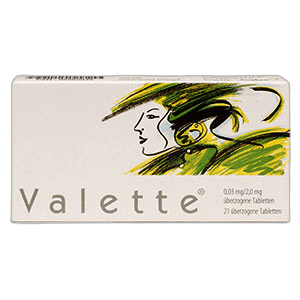
What is Valette?
Valette is a combined hormonal birth control pill that contains the progestin dienogest and the estrogen ethinylestradiol. It was developed by Jenapharm.
Valette and Maxim have identical active ingredients – they contain the same hormones at the same dosage. The difference lies in the brand name.
With correct use, the Pearl Index is 0.1 to 0.9.
Active Ingredients & Mechanism of Action
Active ingredient: Dienogest 2 mg, Ethinylestradiol 0,03 mg
Valette prevents pregnancy through several mechanisms:
Prevention of ovulation: The combination of hormones suppresses the release of the gonadotropins FSH and LH from the pituitary gland. Without these hormones, no egg maturation and no ovulation take place.
Change in cervical mucus: The hormones make the mucus in the cervix thicker and harder for sperm to penetrate.
Effect on the endometrium: Under the influence of dienogest, the uterine lining builds up less and is less receptive to possible implantation.
Antiandrogenic component: Dienogest inhibits the effect of male hormones on the skin and hair follicles. This explains the often positive effects on acne and oily skin.
Who is it suitable for?
Valette is suitable for:
- Women who want reliable hormonal contraception
- Women with hormone-related skin problems
- Women who prefer a regular cycle
Particularly suitable:
- For acne and oily skin
- For an irregular cycle
- For painful menstrual periods
Check before prescribing:
- Thrombosis risk factors
- High blood pressure
- Smoking status
- Concomitant medication
Available Dosages
Active ingredient composition:
- Dienogest: 2 mg
- Ethinylestradiol: 0.03 mg (30 micrograms)
Available pack sizes:
- 21 film-coated tablets (1 cycle)
- 3 x 21 film-coated tablets (3 cycles)
- 6 x 21 film-coated tablets (6 cycles)
Intake cycle: 21 days of intake, then a 7-day break with withdrawal bleeding.
How to Take
Starting intake: Take the first tablet on the first day of your period. Protection is then immediate. If you start on day 2-5, also use condoms for contraception for 7 days.
Daily use:
- Take at about the same time every day
- Swallow with water
- Regardless of meals
Break and restart: After 21 tablets, take a 7-day break. Start the new pack on day 8, regardless of bleeding.
If you forget a pill:
- Less than 12 hours: Take the missed pill immediately
- More than 12 hours: Take the missed pill + use condoms for 7 days
Gastrointestinal problems: If you vomit or have severe diarrhea within 4 hours after intake, take a replacement tablet.
Contraindications
Contraindications:
- Venous or arterial thromboembolism (current or in your medical history)
- High risk of thrombosis due to multiple factors
- Severe liver disease
- Liver tumors
- Hormone-dependent tumors
- Unexplained vaginal bleeding
- Migraine with aura
- Pregnancy
Relative contraindications:
- Smoking over the age of 35 (another method of contraception is strongly recommended)
- Significant excess weight (BMI > 30)
- Controlled high blood pressure
- Diabetes without vascular damage
- Family predisposition to thrombosis
Thrombosis risk: Combined pills containing levonorgestrel, norgestimate or norethisterone are associated with the lowest risk of blood clots in the veins. Valette can have up to 1.6 times this risk. The risk is highest in the first year of use.
Possible Side Effects
Common:
- Headache
- Nausea
- Breast tenderness
- Breakthrough bleeding
- Mood swings
Uncommon:
- Migraine
- Changes in libido
- Weight fluctuations
- Skin changes
Rare but serious:
- Thromboses (leg veins, pulmonary embolism)
- Heart attack, stroke
Warning signs: See a doctor immediately if you have: leg swelling, calf pain, shortness of breath, chest pain, sudden headache, visual disturbances.
Interactions
Reduced effectiveness due to:
- Antiepileptics (phenytoin, carbamazepine)
- Rifampicin
- HIV medications
- St. John's wort
Valette can affect:
- Lamotrigine (level decreases)
- Ciclosporin (level increases)
No relevant interaction:
- Standard antibiotics
- Short-term pain relievers
Frequently Asked Questions
Valette and Maxim contain exactly the same active ingredients at the same dosage. They are different brand names from the same manufacturer. You can therefore switch between them without any problems.
Yes, dienogest has antiandrogenic properties. Many women notice an improvement in acne and oily skin after a few months.
Only to a limited extent. To postpone the withdrawal bleed, you can continue straight on with the next pack without a break, up to the end of this second pack at most. Breakthrough bleeding or spotting may occur while you are taking the second pack. This should be discussed with your doctor.
Immediately if you start taking it on the first day of your cycle. If you start later, after 7 days of correct intake.
Valette is approved for women of childbearing age. For very young women, the doctor may prefer a lower-dose pill if appropriate.
Similar Medications
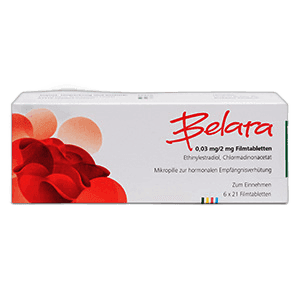
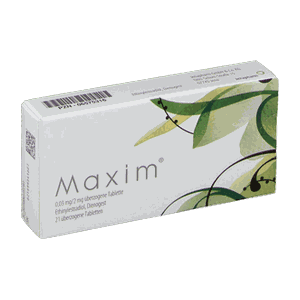
Is Valette right for you?
A licensed doctor will review your information and issue a prescription if suitable. Discreet and secure.
Important Notice
This information does not replace medical advice. If you have questions about your health or the suitability of this medication, please consult a doctor or pharmacist.
Important Safety Information
This service operates under German pharmaceutical law (HWG). For risks and side effects, read the package leaflet and consult your doctor or pharmacist. All medications are dispensed from a licensed pharmacy in Germany.