
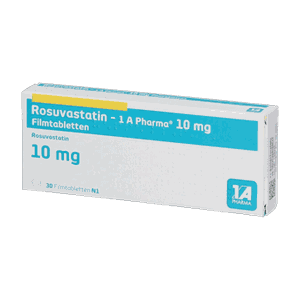
What is Rosuvastatin (Crestor®)?
Rosuvastatin is the most potent statin available and can lower LDL cholesterol by up to 55%. It is marketed under the brand name Crestor® and as a generic (e.g., Rosuvastatin-ratiopharm®, Rosuvastatin HEXAL®).
Unlike simvastatin and atorvastatin, rosuvastatin is only minimally broken down by CYP enzymes, which results in significantly fewer interactions with other medications. It is a hydrophilic statin that is preferentially taken up by the liver.
The JUPITER trial demonstrated that rosuvastatin significantly reduces cardiovascular events even in patients with normal cholesterol but elevated CRP (an inflammatory marker).
Active Ingredients & Mechanism of Action
Active ingredient: Rosuvastatin (als Calciumsalz)
Rosuvastatin inhibits cholesterol biosynthesis particularly strongly:
Mechanism of action:
- Most potent inhibition of HMG-CoA reductase of all available statins
- Hydrophilic: preferentially taken up into liver cells
- Low uptake into muscle cells (theoretically fewer muscle problems)
- Strong compensatory upregulation of LDL receptors
Lipid-lowering effect:
- LDL cholesterol: reduction by 40–55% (dose-dependent)
- Triglycerides: reduction by 15–25%
- HDL cholesterol: increase by 8–14%
Special features:
- Minimal CYP3A4 metabolism → few interactions
- Mainly excreted unchanged via the liver
- Not affected by grapefruit juice
- Can be taken at any time of day
Onset of action: Marked LDL reduction after 1–2 weeks. Maximum effect after 4 weeks.
Who is it suitable for?
Rosuvastatin is suitable for:
- Adults with primary hypercholesterolemia
- Patients with familial hypercholesterolemia (severely elevated LDL)
- Mixed dyslipidemia
- Primary and secondary prevention of cardiovascular events
- Patients with elevated hsCRP and cardiovascular risk
Especially recommended for:
- High LDL that needs to be lowered substantially (> 50%)
- Many concomitant medications (few interactions)
- When atorvastatin is not sufficiently effective
- Familial hypercholesterolemia
Not suitable:
- Pregnancy and breastfeeding
- Active liver disease
- Severe renal insufficiency (all doses)
- History of myopathy while taking statins
Available Dosages
Starting dose:
- 5–10 mg once daily
Usual dosages:
- 5 mg: start of therapy, especially in Asian patients or those at increased risk of myopathy
- 10 mg: standard dose for most patients
- 20 mg: when a greater reduction is required
- 40 mg: maximum dose, only for severe hypercholesterolemia under close monitoring
Available strengths:
- 5 mg, 10 mg, 20 mg, 40 mg film-coated tablets
LDL reduction by dose:
- 5 mg: approx. 38%
- 10 mg: approx. 43%
- 20 mg: approx. 48%
- 40 mg: approx. 53–55%
Dose adjustment:
- Moderate renal insufficiency (creatinine clearance < 60 ml/min): start with 5 mg, 40 mg contraindicated
- Severe renal insufficiency (creatinine clearance < 30 ml/min): contraindicated
- Asian patients: start with 5 mg (increased exposure)
How to Take
How to take:
- Once daily at any time of day
- Regardless of meals
- Swallow the film-coated tablet with water
Advantages:
- No fixed time (unlike simvastatin, which must be taken in the evening)
- No grapefruit problem (unlike simvastatin and atorvastatin)
Important notes:
- First lab check after 4–12 weeks
- Regular monitoring of liver values, lipid profile, and kidney function
- If you have muscle pain or dark urine: contact a doctor immediately
- Thyroid function should be checked before starting therapy
If you miss a dose: Take it at the next regular time. Do not take a double dose.
Contraindications
Rosuvastatin must not be taken in cases of:
- Active liver disease or unexplained elevation of transaminases
- Pregnancy and breastfeeding
- Severe renal insufficiency (creatinine clearance < 30 ml/min, at all doses)
- Myopathy
- Concomitant cyclosporine therapy (at all doses)
- Hypersensitivity to rosuvastatin
Caution in cases of:
- Hypothyroidism
- Personal or familial muscle disease
- Asian ancestry (increased plasma levels, 40 mg contraindicated)
- Renal insufficiency (dose adjustment, 40 mg contraindicated from moderate renal insufficiency onwards)
- High alcohol consumption
- Concomitant use of fibrates (40 mg contraindicated)
Pregnancy: Strictly contraindicated. Reliable contraception required.
Possible Side Effects
Common (1–10%):
- Headache
- Dizziness
- Myalgia (muscle pain)
- Gastrointestinal complaints (constipation, nausea)
- Asthenia (weakness)
- Elevated liver enzymes
- Diabetes mellitus (slightly increased risk, dose-dependent)
Uncommon (0.1–1%):
- Skin rash, pruritus
- Elevated CK levels
- Abdominal pain
- Proteinuria (at high doses)
Rare:
- Myopathy, rhabdomyolysis
- Pancreatitis
- Hepatitis
- Peripheral neuropathy
Note: In controlled studies, the rate of myopathy with rosuvastatin is comparable to that of other statins. The hydrophilic profile theoretically protects against uptake into muscle cells.
Interactions
Advantage of rosuvastatin: Minimal CYP3A4 metabolism → significantly fewer interactions than simvastatin or atorvastatin.
Contraindicated with:
- Cyclosporine (all doses)
Dose limitation with:
- Gemfibrozil: rosuvastatin max. 20 mg
- Lopinavir/ritonavir, atazanavir/ritonavir: max. 10 mg
- Regorafenib: start with 5 mg, lower maximum dose (rosuvastatin exposure increased about 3.8-fold)
Caution with:
- Anticoagulants (warfarin, phenprocoumon) – monitor INR
- Fibrates (risk of myopathy)
- Fusidic acid (systemic): interrupt rosuvastatin during fusidic acid treatment, resume no earlier than 7 days after the last dose of fusidic acid
No relevant interaction with:
- Grapefruit juice (only minor metabolism via CYP3A4)
- Amiodarone, verapamil, diltiazem (no dose limitation needed, unlike with simvastatin)
Frequently Asked Questions
Yes, rosuvastatin is the most potent statin available. Just 10 mg lowers LDL cholesterol by about 43%, while atorvastatin 10 mg achieves about 30% and simvastatin 10 mg about 25%.
Yes, rosuvastatin is metabolized via CYP3A4 only to a small extent and therefore has no interaction with grapefruit juice. This is an advantage over simvastatin and atorvastatin.
People with diabetes have a greatly increased cardiovascular risk. The strong LDL reduction achieved with rosuvastatin protects the heart and blood vessels. Please note, however, that statins (including rosuvastatin) can slightly raise blood sugar – but this effect is outweighed by the cardiovascular benefit.
Similar Medications
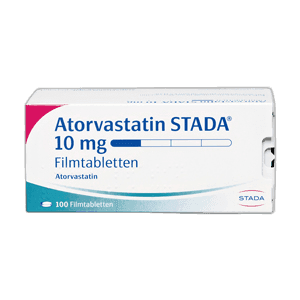
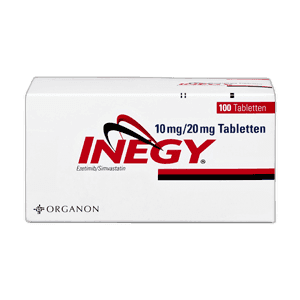
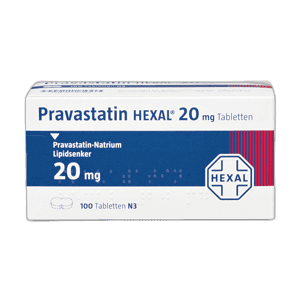
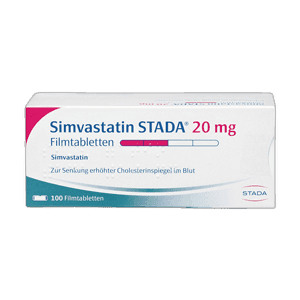
Is Rosuvastatin (Crestor®) right for you?
A licensed doctor will review your information and issue a prescription if suitable. Discreet and secure.
Important Notice
This information does not replace medical advice. If you have questions about your health or the suitability of this medication, please consult a doctor or pharmacist.
Important Safety Information
This service operates under German pharmaceutical law (HWG). For risks and side effects, read the package leaflet and consult your doctor or pharmacist. All medications are dispensed from a licensed pharmacy in Germany.